
When is the last time you had to wait for something? When is the last time you enjoyed waiting for something? At the doctor’s office, at an airport, in traffic or even if you can remember for your AOL dial up internet to get you online, everyone* hates waiting. (*If you particularly enjoy waiting, feel free to drop me a line and explain yourself).
As they leave Egypt and traverse through the wilderness en route to Eretz Yisrael, they Jewish people are a people used to waiting. They waited year after year enduring backbreaking labor, they waited through the 10 plagues wrought by God onto their oppressors, and now they wait (although they’re not inert) to get to Israel. At the very end of Parshas Behaaloscha, Bnai Yisrael are again waiting. They are not waiting for Hashem’s salvation in regard to a treacherous predator out to get them, nor are they waiting for sustenance: They’re waiting for Miriam.
Why are they waiting for her? Did Miriam leave her pocketbook at the previous rest stop? Was she stopping off to take care of a matter which Moshe, Aharon, or Hashem requested of her? Miriam was recovering from tzaraas after having spoken ill of her brother, Moshe.
From this instance we learn of the gravity of the sin of lashon hara. While this may seem like a trivial point we learned in elementary school, this episode is to be recalled daily. In many, if not most siddurim, one of the Six Remembrances (as recorded by Sefer Charedim) at the end of the morning service is to remember what God had caused to Miriam on the way out of Egypt. We are to always be ever so careful with the words that come out of our mouths. Even if our comments are well placed, accurate, and/or make us feel good at the time, that does not give us license to dispense words of gossip or slander. Furthermore, we see that this is a rule that is applicable top-down. Miriam was an important figure, yet she (and Aharon) still contracted tzaraas.
This is understood and accepted. But what difference does it make to the nomadic (at the time) Jewish nation whether or not Miriam contracted tzaraas? Why must they wait for her to recover for seven days outside the camp before they can again set off on their journey?
Rashi points out here that the reason why the nation waiting here is reminiscent of another episode of “waiting.” When Moshe was just a baby and placed among the reeds, it was Miriam who stood hidden to the side to see what would become of her infant brother. When Bas Paro finds him and notices he’s one of the Hebrew babies, Miriam is right there to suggest fetching a Jewish wet nurse for him. While it may seem inconsequential to us, no small act remains far away from the Almighty. Had she not been there laying among the reeds, who knows what may have happened to the individual later referred to as the greatest prophet of Israel, like whom none shall rise again. Miriam was being rewarded here for her actions many years earlier, that the entire nation waited for her until they began to move again.
What does it mean to the people as a whole? From a positive standpoint, Bnai Yisrael are to recall that even though she had contracted tzaraas, she was the same wise and astute Miriam that had tarried until she could see the fate of her brother. She was a special person, not just by being related to Moshe and Aharon, but by her own actions. Love the sinner, hate the sin. How important is this to keep in mind, not only for the nation in the desert, but for us as well?
Yet, at the same time, this was a serious offense. Had Miriam waited around michutz lmachaneh, sequestered outside the camp, and caught up to Bnai Yisrael later on, people wouldn’t necessarily have thought anything of it. They may have thought to themselves “I haven’t seen Miriam around for a while.” They could have thought that if they were to get tzaraas as well, it wouldn’t be so bad. After all, Miriam had it and we went on our way, as if nothing even happened! For Bnai Yisrael to have to wait until all was right, until the guilty party was elevated back to their status as a member of the greater community after having been confined to seclusion, speaks volumes. It’s almost as if all of Bnai Yisrael were packed and ready to go, and stood around for days until Miriam finally journeyed back to the group, surely feeling the glare of millions of eyes upon her. No one likes to hold up the entire crowd. True, the people waited in for Miriam in her merit, yet they also waited as a reminder that no one, no matter the lofty position they hold, stands firm above Divine law.
At a time when many of us may be waiting to go back to our normal routines, sequestered “michutz lamachaneh,” it’s important to know that our actions are tremendously important. What we do and how we do it matters, and can affect those around us, at times, even more than we can imagine. It’s crucial that we not lose sight of this.
 While this was happening, I was hopeful. Now with the spleen removed, it’ll be smooth sailing for Sheila Balk. Yes and no…




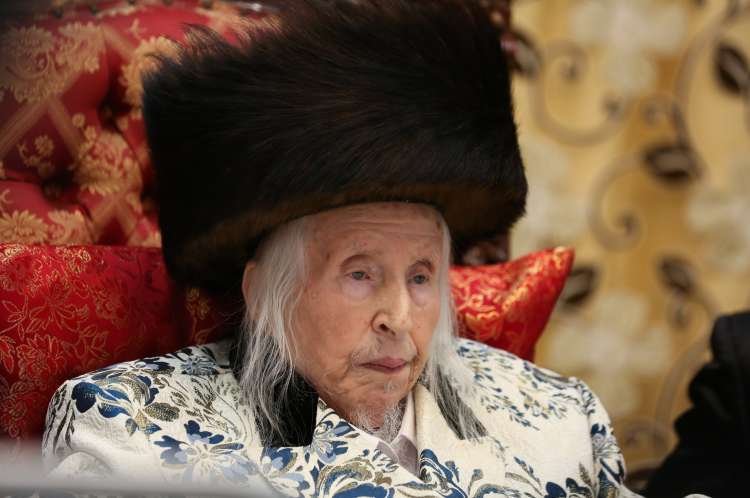 –Today, I also think about Rabbi Menachem Mendel Taub, the
  These experiments rendered him sterile. The “hallmark” of the Rebbe was that he was probably the only Chassidishe leader without a beard, a choice that he did not make himself. The “Angel of Death” at Auschwitz experimented with the Rebbe, and the chemicals rendered him virtually clean shaven for the rest of his life. This scar stared him in the face for 70 years. The Rebbe was also known for reciting the Shema at his speaking engagements. An
  The 7th day of Adar is both the birthday and death day of Moshe Rabbeinu. On the calendar, this is a very complex day. Contemporarily, we think of the 7th of Adar as a day to recognize those members of the Chevra Kadisha who care for the deceased of the community. There is a custom to fast, and when the fast is over, they are to eat a seudas mitzvah, often accompanied by a siyum (keep those ideas in mind for now). Rabbi Gavriel Zinner in his encyclopedic Nitei Gavriel lists a few interesting halachic/hashkafic considerations for Zayin Adar:
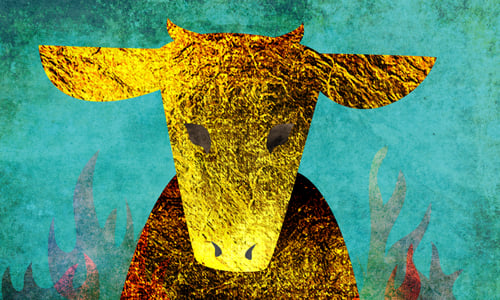 Ki Tisa contains the worst sin brought about by the collective Jewish people in the entire Torah, Cheit HaEigel (the sin of the golden calf). The nation, after just having left their tormentors in Egypt and stood at the base of Mt. Sinai and accepted the word of God, so quickly and forcefully veered directly away from the path that they had sworn to stay firmly upon. Moshe ascended Har Sinai and was to be gone for 40 days and nights, and as we know, due to an error in counting, the am was confused and afraid. They went to Aharon HaKohen, Moshe’s brother and confidant, and clamored for a new god “Because this man Moses who brought us up from the land of Egypt–we do not know what happened to him.” Aharon was in a bind and actively tried to stall the people a few times. Yet, through all of his good intentions, the idol was created and brought down the entire nation.
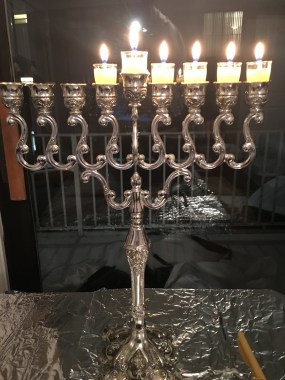 As Yaakov Avinu lay on his deathbed in Parshas Vayechi, he doles out final brachos to his children. When it comes to his son Yehuda, part of the blessing states that the “the scepter shall not depart from Yehuda.” Ramban explains that this means that when there will ultimately be a king that rules over the Jewish people, that king will be from the tribe of Yehuda. However, the Chashmonaim were not from the tribe of Yehuda, but actually from the tribe of Levi. Their rule over the Jewish people deviated from the bracha given to Yehuda. Were the Chashmonaim right to take over the leadership?
 Akiva Nechamtanu