7 years ago today, February 20, 2018, after a few years of waiting, we welcomed the arrival of our oldest son, Yaakov Yehoshua Menashe. Last night, we baked his birthday cake, set out a new Teenage Mutant Ninja Turtles hoodie along with the “It’s My Birthday” sunglasses and ribbon. Our house decorated with birthday fare.
Then we woke up this morning.
I looked at my phone and wanted to pull the comforter back over my head and forget about the world.
They said be careful how much you consume today of the return of Oded, Shiri, Ariel, and Kfir. And if you saw the disgusting spectacle on display today, you know how right that statement is. Rather than look at these infuriating public displays by our enemies (where, apparently, there hasn’t been electricity or other necessities, but there’s somehow been professional-grade printing and marketing services to create the nauseating PR seen today…), I saw a link to dashcam footage of the Israeli police escorting our beloved hostages back to Israel.
I watched the ICRC, whose concern for the hostages almost rival that of Hamas’, pull up in their brand-new company vehicles. I skipped ahead in the footage to when the motorcade began and began to document my thoughts on my phone:
The convoy begins to depart. There is no sound, only the slightly-grainy video.
The roads are winding and open, no other cars there yet. As the police escorts the large cargo vans, the classic Israeli road signs begin to be seen and my heart sinks.
Nachal Oz
Nir Oz
Re’im
Zikim
Ofakim
Alumim
Sderot
Places we all know by now, but not what they’d like to have been known for pre-October 7. I skip ahead a little more and there are cars parked haphazardly on each side of the roadway.
I’ve seen this before…the aftermath of the Nova festival and the graveyard of cars.
Except now, these cars are with their drivers, who’ve exited and are standing at attention with yellow and Israeli flags.
*At this point, my son Yaakov wakes up and sneaks out of bed to the hallway where he shouts “Surprise!” to my wife and other children. I’m still in our bedroom trying to hold it together.* The rest of the family sings to Yaakov while the procession makes its way through more Israeli highway. Now, there are other cars driving alongside our beloved hostages.
The road signs begin to change to cities and towns that I’ve heard of long before. More blue and white, more yellow, more flags, more and more people standing out to welcome homepeople they never met but have gotten to know well over the last 500+ days.
*Yaakov comes into my room and I hug him tightly and kiss his head. I call Yair to come in as well, which he does, and I hug and kiss him too. They run back to the kitchen as if nothing was going on in the world.
The weather conditions along the drive are switching back and forth from raining to not. Tears from Heaven, tears on many of our faces.I skip ahead more and more until I finally reach the end of the video, get up and dressed, and try to put myself back together to get everyone out of the house on time.
Oded, Shiri, Ariel, and Kfir – you are finallyback in Israel, what we’ve been hoping and praying for for over a year. But this isn’t how we imagined you’d return to us.
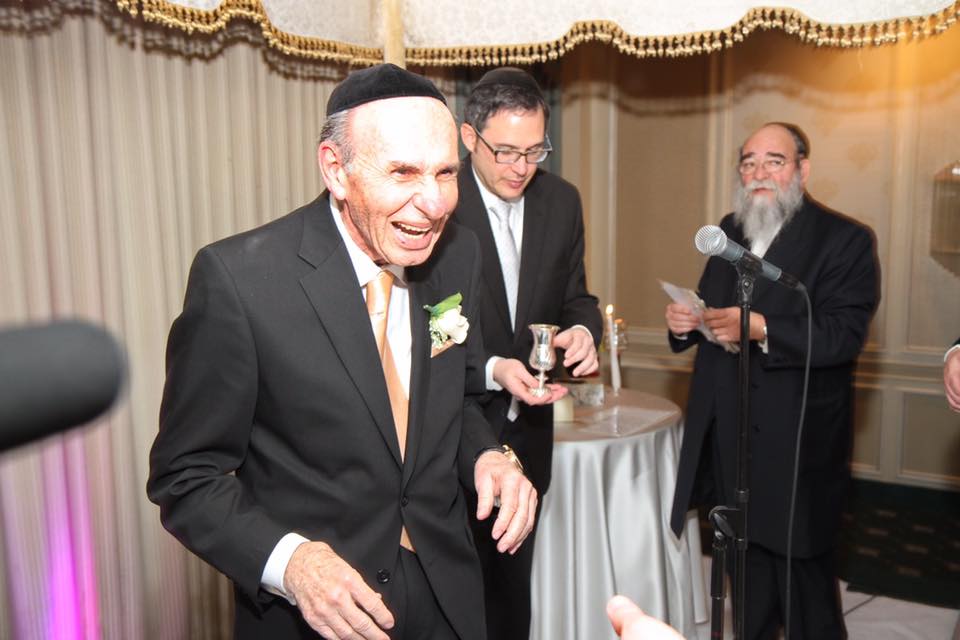
Remarks delivered at my grandfather’s funeral that took place on December 26, 2024. I don’t want to call it a “hesped”/eulogy since it occurred on the first day of Chanukah, when eulogies are otherwise forbidden. Here is just a small snapshot of the giant that was our patriarch. Yehi Zichro Baruch – WB
I’m going to be very honest with you; this is one of the weirdest days of my life. Never in my mind did I picture something like this happening (as ridiculous as that sounds). It just doesn’t make sense. He was my grandfather and lived a wonderful rich, robust life. It feels so bizarre.
Today is the first day of Chanukah, a day in which we are not supposed to give traditional eulogies. I will try to stay within the confines of those boundaries but my grandfather, Ed Balk, Yehuda ben Yaakov, was not a traditional person by many measures. You see, my grandparents exuded a sense of royalty but it’s different than the standard. It’s true that my grandmother, my Savta was a queen. THE Queen. But when I think of my grandfather, I don’t think of him as a king. To explain why, I need you to travel with me to Passover, and I think you’ll get the picture.
Pretend we didn’t just light the Menorah and journey with me to some of the most cherished times of my childhood when we would spend our seders on Polo Drive and then on Crandon, in a room built specifically in mind for hosting these type of events. The Haggadah makes a point to let us know over and over again that it was God Almighty that redeemed the Jewish people from Egypt. Not through an angel, not through an intermediary, a messenger or a middleman, but by the Master of the Universe Himself. It’s true that He sent Moshe and Aharon to take a large role in the process, but after all was said and done, it was He, with a Mighty Hand and an Outstretched arm who took care of business. When you care for people, when you want to have a relationship with people, you put in the work. When a King or a President pardon an individual, they are not the ones showing up to free that person from jail. Or to put it differently, a king doesn’t roll up his sleeves and play baseball with you in the backyard. A monarch doesn’t grill their own chicken or salmon for dinner. A king doesn’t make their own oatmeal day after day, year after year, putting it in the freezer to cool it down before it was just right. A king has subjects to do their bidding out of fear or dread. That’s the opposite of who my grandfather was. So Saba was definitely not a king, and I think you understand why.
You all know by now that Saba loved oatmeal, and he loved Buicks. I remember when I was at camp one summer when I received a full page email from my father, in all caps: SABA BOUGHT A CADILLAC! To make it even more bashert, the leather seat color was named “oatmeal” and the beige of the car mirrored the bowls that he used. Unfortunately, this was a love that was not meant to be, and after a few years, much to the Chagrin of my dad, the Cadillac went away and a new Buick was procured.
But more than oatmeal, Buicks, and Cadillacs, what I learned the most from Saba was that the best ability is availability. You show up for those that you care about. It was exciting when Saba and Savta, and later just Saba would show up at our events and celebrations, but I can’t say it would be a surprise because it always happened. When he flew in for my Chag HaSemicha, our engagement party, and even for Yaakov’s bris, like most of his great-grandson’s brissim. I remember him calling me a few days after Yair was born, with sadness in his voice and he apologized that he wouldn’t be able to make the trip in because his eye doctor didn’t want him to fly because of the pressure. Whose almost 91 year old grandfather hops on a plane for these things? Ours certainly did. And that didn’t stop him from flying to Florida a year later for Leo’s bris, just a little before his stroke. One final point about brisses: I still can’t believe that he and Savta drove from Florida to Chicago for my bris, a 19 and half hour drive at best. Or how, on Thanksgiving in Indianapolis at Aunt Carla’s house when we heard that Uncle Lester passed and the funeral was in Chicago. We got in the car and drove through a snowstorm to get there, turned around and came right back after the graveside service. (In the Cadillac, for the record. The best ability is availability, and Saba Raba was available for all those he cared about.
It’s painfully fitting that your passing comes among the weeks when we read of Yehuda in the Torah, and when we celebrate the legacy of Yehuda and the rest of the Maccabees. There is so much more to say about you Saba, and it’s so hard to stifle ourselves both because of Chanukah and because of the time limit we have, but I think I can capture what I’m feeling best in something I wrote in your 90th Birthday Book:
Dear Saba,
Our sages teach us that when parents give a child their name, it is more than just a moniker to differentiate them from their peers. The attributes and nuances of the name that a child is given takes a hold of their character based on the meaning of the name or who it is they were named for. When it comes to Edward, Ed, or Eddie, I’ll admit I’m at a loss for an explanation. However, your Hebrew name speaks volumes.
We learn through recounting the episodes in the beginning of the Torah of the sense of leadership that runs through the veins of the Biblical Yehuda ben Yaakov (I’m sure you’ve chanted those specific verses tens of times). Yehuda was an individual who spoke up not because he wanted recognition or accolades, but because it was the right thing to do. Famously, when the youngest of the sons of Yaakov is about to languish in jail for a crime he did not commit, it was Yehuda who spoke out that he should be taken in the stead of his little brother. Meanwhile, none of the other brothers, all of whom were assembled there, sought to right this wrong. Not even the eldest of the bunch.
You, our very own Yehuda ben Yaakov, have taught us so many vital life lessons, not through stern warnings, but through devoted action. You did not implore your progeny with the importance of Jewish continuity and commitment to our communities; you stood up and took active leadership roles. Nevertheless, working behind the scenes was not the end of the line. You were and are a committed Minyanaire (and, as I found out this week, a Mensch of the year!) and a dedicated Baal Koreh. Whether sitting on boards of organizations or preparing the weekly laining, your demeanor was not one of regret or frustration at what you had committed to do. This pattern of behavior would not have continued for decades had you not felt the importance of what you were doing. The importance not for your name to be adorned atop the organizational letterhead or in the weekly synagogue bulletin, but the importance of ensuring that all was taken care of.
Your service to your Jewish community inspired your children, all of them, to make a commitment to Yiddishkeit in theirs. No matter where they have lived, the Balk children, and now grandchildren, have not been content to sit on the sidelines while others inform us what our Jewish experience is to be. You did this all while maintaining a robust professional life at Solon Gershman (and what I’m sure was a busy golf schedule as well). While the world landscape may be different now that it was then, the groundwork that you laid for us all is so important. My size 16 feet will have trouble filling your shoes in regard to leadership and dedication to us, your loving family.
When Grandpa Jack and Grandma Eva named you Yehuda (or Yidel), I’m not sure of what their exact thought process was, but what I can say for sure is that there is no more fitting a name for someone of your stature.
Saba, you’d always remind us to appreciate the moment. We joked last night that that’s why one of the only indulgences you actually splurged on were watches because of the value of time. You’d always remark “You couldn’t get it next week!” But Saba, how we’d give just about anything to get it next week. And the week after, and the week after, and the week after. We take solace in the fact that you’re no longer in pain, that you’re reunited once again in the Grand Central Station shel maalah with Savta, your parents, Aunt Noma, my mom, and everyone else that you loved and that loved you so much. But Saba, you still have some work to do. The same way that you were able to accomplish so much, take those same enthusiasm and tell God that we need help down here. Our people need protection. A painful war is still raging in our homeland. There are still 100 hostages that need to come home right now. You did so much, not with brashness or brute strength, and we need people like you more than ever.
Saba, I’m sorry that I did not show you enough kavod in your lifetime. I’m sorry that I didn’t call you enough, even though you were great on the phone (and quick). I’m sorry I considered wearing a tie that I bought on Amazon to your funeral today. In Gan Eden you will see just how much we love you and how hard we will continue to work to keep the Herculean legacy that you lived every day of your life, alive and well. Thank you for everything. Umacha Hashem Elokim Dima M’al Kol Panim.
I don’t know much about Rent (the musical). Pretty much the only thing I know about it is that the song “Seasons of Love” comes from it, and, as such, I can tell you how many minutes there are in a year. We all know the words, a lot of them, if not all.
“How do you measure, measure a year?
In daylights, in sunsets In midnights, in cups of coffee In inches, in miles In laughter, in strife”
As we sit on the precipice of Rosh Hashana, we say goodbye to the old year and hello to the new one. This is certainly been a year that I’ll never forget. Looking back, how do you measure a year like this?
In tears, in perakim of Tehillim
In duffle bags, in drones
In airport, in angels.
This has likely been the most challenging year of my life. (Thanks, Captain Obvious). The year I lost my mother was the most personally challenging for me, but this has been the most difficult year to be part of the broader Jewish community, I think even more difficult than Covid. I didn’t live during the time of the Holocaust or any of the other calamaties that have befallen our people over our history so I obviously can’t speak about that.
This year has certainly taken its toll on us. The pain and damage are both immense, too much for words. So much death. Too much death. Innocent victims still held hostage by Hamas monsters. It’s been almost a full calendar year. Every season and (almost) every holiday passing by without seeing the light of day. I want so badly for each of them to come home safely, fighting back my instincts that tell me that the murderous captors who snatched them in the first place do not make for the ideal caregivers. They have nothing to lose and that’s when everyone loses the most.
Yet, our darkest hours has also produced some of our finest hours. Transforming regular indivuals into heroes exhibiting superhuman strength they never imagine could’ve been conjured up.
This is a year when I’ve made many new connections and strengthened old ones. We’ve been able to accomplish so much together. I’ve never been more inspired, even amidst the heartbreak. I’ve grown so much, our family has grown.
Even among the challenges this has been a year that I’ll never forget, both for the bitter and for the sweet. Looking forward to an even better 5785.
What do you do when you have so much to do in so little time? What are some of the strategies you employ? Some things you make sure to have on hand? Coffee, energy drinks, comfortable clothes, noise-canceling headphones? Do you block out the outside world? Turn off your phone and plop yourself down in one spot until you’ve done all you needed for the day?
I have 10 days.
10 days to be as productive as possible. 10 days to do as much as I can.
But really, when you divide up all the time, it’s really so much less. Take out the time spent asleep, in the shower, etc. Those days are automatically slashed in half.
I only have 10 days. But it’s not really 10 days.
Some people need silence. Others need background noise. Some need both depending on what it is they’re trying to achieve.
I only have 10 days.
Earlier this week, upon logging into a streaming app to put on some visible “Muzak” in order to get work done, I saw a a white banner gracing my screen reading “EXPIRING IN 10 DAYS.” True, I can knock a bunch out while cooking for Shabbos and Yuntif, the idea that there’s an expiration date on my background noise is, for some reason, bothersome to me. I suddenly cared about plot lines and character development, worried about how I’d ever be able to feel a sense of closure if I didn’t get to the compete the series.
Then, I feel a tinge of horror as I realize that I don’t actually have 10 days to compete this mission. I can’t cross off a few episodes over Shabbos or Yom Kippur, so my available time to allot to this particular endeavor becomes even more limited. The pressure is on.
My Rosh Yeshiva would chide us that we should all commit to coming back and learning for a second full year of Torah study because there was so much time “wasted.” Not entirely frittered away, per se, but once you factor in Shabbosim, holidays when the schedule is off, and, coupled with the notion that serious learning only really sets in around Chanukah time, you’re barely left with a few months of intense dedication. The argument works well for some. For others, and many of the former’s parents, it’s not an argument that will be won.
But this is viewpoint that we don’t always realize at this time of year either. We make a mistake when we talk about the 10 days of repentance, the Aseres Yemei Teshuva. Rosh Hashana falls on the first two days of Tishrei and Yom Kippur is on the 10th. We think we have 10 full days between the two but it’s just not true. At times, when Rosh Hashana leads immediately into Shabbos, it can feel like we have even less time to complete our spiritual “to-do” list.
But the difference here is that we don’t only have 10 days to repent and reset. We have the entire year. Teshuva is not a process that we are to only think about or act upon solely during this time of the year. It’s incumbent upon us year round! Although that the calendar certainly puts us in more of a mood to seek forgiveness for our transgressions, the work we put in now doesn’t have to with such pressure. Because we can flex this teshuva muscle each and every day. We pray for teshuva three times daily in our Shemoneh Esrei.
There may be a lot to do, but there’s still time to accomplish so much.
Immediately following Tisha B’Av and the related stringencies we keep until the following day at chatzot, we herald in a wave of comfort. This Shabbat is known as “Shabbat Nachamu” coming from the words of the Haftarah “Nachamu, Nachamu Ami, Comfort, Comfort my nation,” and this verse ushers in seven consecutive weeks of consolation through words of our prophets. As is often the case, we look around in our lives and we wonder where this nechama is supposed to be. Sometimes it hits much harder, like in the weeks of the shiva dinechemta when war raged in Israel. Shabbat Nachamu 2006 was only a few weeks after the terrifying capture of IDF soldiers Gilad Shalit, Ehud Goldwasser, and Eldad Regev, and the heartbreaking saga of the capture and murder of Gilad Shaer, Naftali Frenkel, and Eyal Yifrah in 2014. Then, as in other times of tumult for our people, Tisha B’Av came and went but the nechama was seemingly anywhere but among us.
In his youth, Rabbi Soloveitchik once asked his father why there are so many unresolved questions across the Talmud. His father answered him that not every event can be comprehended by human beings. It’s one of the most frustrating things. Unfortunately, I don’t really have an answer, but I can try and put forth a suggestion about prospective.
One of the most spurious claims about Jews in modern times is the trope of dual loyalty. But being a member of Klal Yisrael means that we live with the duality of being able to celebrate amid sadness. We add many customs of mourning and remembrance at every Jewish wedding, a time of otherwise unbridled happiness.
We can go back in time and pour over the various events that have befallen the Jewish people and find silver linings. The Gemara at the end of Makkot (24b) recounts the story of Rabbi Akiva and three other sages walking by the ruins of the Beit Hamikdash when they spotted a fox running around the spot where the kodesh hakodashim once stood. The sages started weeping bitterly, while Rabbi Akiva began to laugh. His colleagues looked were puzzled at how he was able to take delight in such a spectacle. Rabbi Akiva answered them now that he has seen the prophecy or Uriah Hanavi be fulfilled, regarding the Holy Temple having been ravaged, so too we now know that the nevuah of Zechariah Hanavi, that again the streets of Jerusalem will be filled with old men and women, will surely come to fruition. Rabbi Akiva’s colleagues answered back to him “Akiva you have comforted us, Akiva you have comforted us.”
If we all employ the approach of Rabbi Akiva’s holy cohort, we may still be crying uncontrollably. True, we know there are horrible things going on around us, but we must realize that better days are ahead of us. Rabbi Akiva’s perspective did not undo the destruction that occurred or rebuild the Temple right then and there.
Even amid our sadness and pain, it’s incredible to look back and marvel at how our communities come together when one of our own is in need. Meal trains, Tehillim chats, etc. Even if the results do not turn out the way we want them to, our efforts aren’t for naught. To paraphrase Rabbi Menachem Mendel of Kotzk on how and when one can find God in their lives, we can find nechama wherever we let it in. Let us find nechama from the words of the pasukim from our Parsha: “From there you will seek the Lord your God, and you will find Him, if you seek Him with all your heart and with all your soul.When you are distressed, and all these things happen upon you in the end of days, then you will return to the Lord your God and obey Him.For the Lord your God is a merciful God; He will not let you loose or destroy you; neither will He forget the covenant of your fathers, which He swore to them. For the Lord your God is a merciful God; He will not let you loose or destroy you; neither will He forget the covenant of your fathers, which He swore to them.” Rashi comments that “not let you loose” means that He will not loosen his hold on you, that we will always be close to the Almighty no matter what the circumstance.
Being comforted doesn’t mean that everything will automatically be better or go back to the way it was. One of the most touching videos I’ve seen that helps hammer this message home is from Chai Lifeline where Rabbi Yerucham Olshin, one of the four heads of the country’s largest yeshiva, is at a hospital visiting a young girl with a brain tumor. The girls asks the rosh yeshiva for a bracha that she should be able to go to camp, and Rav Olshin responds with a bracha. She the clarifies, “no, I mean like right away!” This child has been in and out of the hospital battling her illness. She doesn’t ask for a bracha that she should be immediately healed and there should be no trace of the tumor ever again, while we know she would certainly want this. The blessing she sought was that she could go to camp, to feel like a regular child “because it’s the only place where everyone understands me. At camp, I don’t feel so alone because I see that everyone is going through a hard time.” In the end, while she was too sick to attend camp for the whole session, her doctors gave clearance for to go up for a couple of days. You can see the difference on her face before, as she talks to the rosh yeshiva, and after she returns from her short visit.
May Hashem grant us the strength to always find comfort.
There are many that will jump to tell you that this year’s commemoration of Tisha B’Av is a nidcheh, pushed off from it’s original date. In truth, 9 Av takes place on Shabbat, a time when we do not fast (unless it’s Yom Kippur) or mourn publicly. So 10 Av is a day every few years that has all the stringencies of the preceding day’s practices of mourning. True, there are leniencies with regard that exist in a year when Tisha B’Av is pushed off, and there are those who will explain that this is a reason for us to, potentially, “temper” our sadness. While I’m not one who usually tells people to wallow in sadness, there is still reason to remain somber on this “nidcheh.”
-First and foremost, most of the Temple itself was consumed by fire on the 10th of Av. It’s for this reason that Rav Yochanan in the Gemara (Taanit 29a) states that had he been around during the establishment of this mournful day, he would’ve fought to institute the fast on the 10th, not the 9th. The rabbis don’t tell Rav Yochanan that he’s mistaken in his approach, but the answer given is that it’s preferable to mark the tragedy on the day it began.
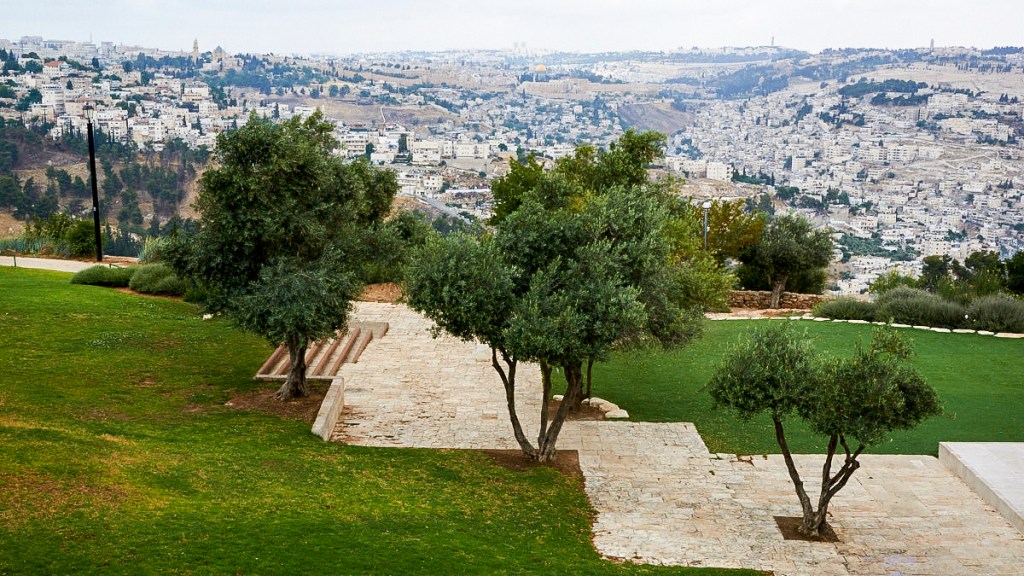
-Second, even with the blessing of the modern state of Israel, we’re still so incomplete without the Beit HaMikdash and what the Messianic era will entail. One of the most meaningful moment’s I’ve spent is Israel is on Tisha B’Av, which I’ve done twice. The first time was on a summer program that took us to the Haas Promenade (the Tayelet) for our reading of Eicha. It was such a moving, meaningful experience that when I ran a trip to Israel seven summers later, I brought my group there to read Eicha. It’s one thing to read the megillah while in an Israeli shul, but it’s another to recite it while actually overlooking the very site where the Temples once stood. You can see the Old City of Jerusalem its modern-day splendor, but the panoramic image is glaringly incomplete. It’s not just the physical structure missing from the landscape that causes us to weep.
-Finally, the Yerushalmi (Yoma 1:1) frighteningly explains that every generation that does not see the Beit HaMikdash rebuilt it’s as if they destroyed it. Many often misinterpret this phrase to teach that it’s as if the Temple was destroyed in one’s lifetime if a new one doesn’t descend from Heaven. What the Yerushalmi actually says is that in any generation in which it’s not rebuilt it’s as if they destroyed it. It’s as if we climbed up to Har HaBayit and laid siege to the holiest space to our people. Not the Romans, Greeks, or anyone else.
Us.
There are various differences in explanation, among the Gemara and other Halachic works, of what it will be like when Mashiach ultimately arrives. Whether or not there will be supernatural events happening every day or it won’t be much different than it is now, at the very least it will be a time of peace. A time when the revivification of the dead will take place, where we can see and connect with those dear to us who have passed on.
Tisha B’Av is a nidcheh this year because of Shabbat and the various practices of mourning are applied today. Let’s hope, and do what we can, so that next year Tisha B’Av can be pushed off because it’s no longer a day of mourning, but a day of happiness and celebration.
Towards the beginning of Parshat Devarim, the verse (1:44) reads “And the Emorite who dwells on that mountain went out against you and pursued you as the bees do…” At first glance, it seems a bit odd. When one describes an attack or battle and wants to convey a sense of power and might, there are plenty of other descriptors that one could use. Bees? What is the reason for this seemingly strange comparison?
Rashi comments on this verse that just when a bee strikes someone by stinging them it dies immediately thereafter, so too the Emorites, after attacking the Jewish nation, also died (or were killed) immediately. Rabbi Yitzchak Zev Soloveichik, the Brisker Rav, helps us understand this idea even further. What would be considered to be more malicious: harming a weaker target who will not retaliate at all or going after a much stronger individual who will surely strike back with much greater force? It may be “easier” to pick on a target that you know you can subdue but it shows a greater amount of disdain for your enemy when you know they’ll wallop you after your initial blow. The Brisker Rav says that although the bees know they’re going to die right after they sting, they adamantly sting nonetheless. This is similar to the Emorite nation, who showed such hatred to the nation of Israel, and knew they were going to ultimately lose anyway, went forth and attacked.
The Brisker Rav continues that this insight regarding bees can help us comprehend psukim in Tehillim that we recite as part of Hallel. “Kol goyim svavuni, beshem Hashem ki amilam, sabuni gam svavuni beshem Hashem ki amilam, sabuni k’dvorim…” or “All nations surround me; but in the name of the Lord I will cut them down! They surround me; indeed, they surround me; but in the name of the Lord I will cut them down! They surround me like bees.” The Vilna Gaon ponders why the Psalmist uses the phrase “surround” so many times. The Gra continues that when a city is under siege and surrounded by enemy forces, the attackers may sense a weak point in their army and send reinforcements to produce a second line of defense. Not only will this provide further protection, but it will prove to their advantage again by having more soldiers ready to pillage and plunder once the city siege is underway. Yet, we see from the words of Tehillim that it is we who will yield triumphant, even staring down such daunting foes with vicious battle plans. Even if the assault will prove to soon be fatal for our foes.
When dealing with an adversary with nothing, or everything, to lose, this type of ambush can be more demoralizing than a battle against a stronger opponent. Think back to Amalek as they bombarded the nascent Jewish nation as they left Egypt. Bnai Yisrael had just seen the most incredible miracle, something that the rest of the world was both mesmerized and terrified over. The very end of Parshat Ki Teitzei reminds us of how Amalek “happened” upon us here, picking specifically on the weak and weary stragglers, with no regard for the Jewish people or their God. The word for “happened upon you,” “karcha”, can also mean to cool down. Rashi explains that Bnai Yisrael were like a hot bath that no one would want to attempt to enter for fear of being burned. Amalek knew they would be scalded, but they took the approach of trying to “cool down” the Israelites for another nation to ultimately attack and overpower them. This is precisely the sort of attack referenced by the bees in Parshat Devarim.
I’d like to take this approach further still, with something beyond the words of Rashi and the Brisker Rav. Generally, people do not like bees. There are indeed exceptions to this “rule,” but most often people will run in the opposite direction from these creatures. When one feels their sting it’s of little comfort that this bee will soon die and not harm them again. Dealing with the effects of the sting are painful at best and can be fatal at worst. Furthermore, why do I care if this bee dies? There are plenty more where that one came from!
Years ago, while not doing research about bees or this Dvar Torah but watching a TV show about invasive pest removal, I learned something fascinating about these insects. Remember learning about pheromones in 6th grade biology, those chemicals you give off when you’re around other people? Other animals give them off as well, including bees. When they sense that there’s trouble with their hive or from a predator, they give off pheromones that alert other bees that they’re in trouble. In your quest to vanquish one lowly bee you may suddenly wind up with an entire swarm out to contend with.
I think the above approaches about bees can help us take action during the current time period on our calendar as well. There is no shortage of calamities, both ancient and even contemporary, that have befallen the Jewish people in the three weeks from 17 Tammuz to 9 Av. We know that the resentment of the Emorites is likened to bees, meant to tell us of the singular focus of that hatred no matter the cost. We must use that exact singular focus in redoubling our efforts of loving and helping one another. Using the approach of the Gra, look for the “weaknesses,” the potential circumstances that will leave people susceptible and vulnerable, and help shore up those gaps. Like the bee that stings with reckless abandon knowing that it will bring upon itself its own demise, we must give to and help those around us. We have Tehillim WhatApp groups, Meal Trains and CaringBridge pages and other ways to alert the masses that there are those who need our support. Oftentimes people don’t know what to do to connect to the sense of loss that we’re supposed to feel over the Temples we’ve lost. But there is plenty of loss around us today, and not only should we sense it, but can help transform it into positivity, which can lead to the ultimate hope: the geulah shleima.
This Dvar Torah is written in memory of my grandfather, William Radman (Akiva ben Yehoshua). Although I’ve heard so much about him, as you can likely surmise, I am named for him and was never privileged to meet him. I cannot, therefore, confirm or deny any thoughts of his pertaining to bees or other winged, stinging insects. But as his yahrtzeit falls today, 7 Av, I am left thinking that his approach to bees would be more in line with “don’t bother them and they won’t bother you” and with regard to helping others, to do so as much as possible.
To be more precise, the cleaning crew is coming to clean our home from top to bottom.
Yet, here I am feverishly cleaning my entire house before their arrival.
Having someone clean your house is a luxury, one that we are able to afford every few weeks. It helps make our home look beautiful and keeps us sane, especially during this pandemic. I can’t say how much time it takes for our blessed abode to become cluttered once more, but that moment of coming home to a shiny, clean space is something I wish I could bottle.
Nevertheless, I am now cleaning for the cleaning crew, and frankly, that is something that feels a bit silly. I don’t cut (what’s left of) my hair before going to the barber. I don’t change the oil in my car before taking it in for a tune-up. It wouldn’t make sense to cut the grass the day before the landscaper comes, would it?
And yet, the scene repeats itself over and over every few weeks. Like clockwork, on the eve of each visit, we stay up late to make sure that clothes are put away, the kitchen is relatively spotless, and the toys my children play with are all where they belong despite the fact that they’ll be played with again before the cleaning crew arrives. In fact, my best, most successful attempts at cleaning my home stem not from stress or feeling boxed in (even during this pandemic), or when I’m particularly happy or sad. These successful campaigns at straightening up aren’t even the result of cleaning for Passover.
It’s whenI’m cleaning for the cleaning crew.
Something here seems askew. Why am I doing all of this in anticipation of their arrival? Is this not the exact reason why we pay for this service? I know we’re not the only ones who do this. We can’t be the only ones, right?
It seems like the behavior of a crazy person. But I learned early on what happens when the cleaning crew comes to work their magic when the apartment is completely cluttered: It doesn’t actually get clean.
Hear me out. Don’t get me wrong, it’s cleaner and more straightened up that it was before. The floors may be shinier and the counter tops will glisten. The beds may be made and the surfaces dusted. Yet, the clutter, the “stuff” that existed beforehand can only be managed, not effectively cleaned up as if it were never there. The items that aren’t in their proper place when the cleaning crew arrive don’t always magically get back to where they belong, some of which hasn’t been “home” in quite some time. The cleaning crew is only able to clean based on what they see in front of them. They can’t be as effective or efficient in their job if the house is not in some sort of order for them when they arrive. Their role is not to purge everything we own and Marie Kondo-style purge our entire living space, unearthing papers and other things that we’ve long forgotten about. The reality is that when I clean for the cleaning crew, which I am loath to do, I’m not only helping them. I’m helping myself.
The more I think about this phenomenon and how it unfolds time and again makes me realize how applicable this scenario is in relation to the High Holidays, which inch ever closer.
In the days leading up to the holiest days of the year, we try and clean our own “houses.” After an intense round of “pre-cleaning,” the Almighty cleaning crew, so to speak, will step in and tidy up what’s left. Every young child in Jewish day school or religious school knows that when Rosh Hashana and Yom Kippur come around, it’s time to say we’re sorry for all the wrong we’ve done. Some make a great effort to do so, during the month of Elul or throughout the year when the issues themselves arise. Others simply don’t, much like the entire rest of the year. Some don’t know that they’ve committed any infractions, while for others, it’s hard to swallow their pride and say sorry. Nevertheless, if we are lax in our effort to repent before the Yamim Noraim, we are somewhat in luck. TheMishnah and later, Rambam, explain that if we take no repentant steps, we will be forgiven of our transgressions between us and the Almighty. A clean slate to start the year.
Much like the cleaning quagmire, what’s the point? If we are to be forgiven anyway with the coming and going of the High Holidays without even exerting much in the process, why even engage in this, at times, raw and uncomfortable procedure? The house will be cleaner even without returning the clutter back to its place.
In truth, there is a reason to engage. Both the Mishnah and Maimonides cited above are explicit in their affirmation that even though God removes our iniquities done in relation to our interaction with Him, this is not the case between our actions toward our fellow humans. Sins that are Bein Adam L’Chavero, between us and those around us, are not wiped away with the setting of the sun on Yom Kippur. While we may attain a level of teshuvah by getting a new start between us and God, there can be so much more that we’re leaving by the wayside. Teshuvah then doesn’t work the way it’s supposed to because it puts us in a false state of forgiveness. It’s a tremendous job to work on oneself during the month of Elul in advance of Rosh Hashana and Yom Kippur, or at any time of the year, and one who does so with great self-reflection is truly worthy of the reward they’ll receive. But if this is not coupled with the same sort of introspection in reference to working on ourselves in the sphere of our interpersonal relationships, in the areas in which we have violated the standards we are to live by, this exercise remains essentially futile. If we do not seek to appease those we have wronged with serious, meaningful teshuvah, this is all for naught. What are we even doing? God’s role in the process is vital but He can only help us in attaining complete teshuvah if we help ourselves.
The month of Elul is quickly coming to a close. The cleaning crew is coming and the time is slipping further and further away.
Fifteen years ago yesterday was the day that changed our family’s life – the day when my mother received a life-saving liver transplant. As we bask in the glow of Isru Chag Liver Day, it’s still a cause for celebration, even as you read this one day late. Liver Day is a day that we mark on our calendar yearly, and there was no question about whether or not to continue to do so after my mother’s passing. This was a day that she considered to be more special, more worth celebrating than her own birthday (which we kept celebrating, and keep celebrating). August 16th will forever be Liver Day, at least for the Balk family.
The first anniversary of my mother’s liver transplant was marked with a party that my sister and I both missed. I had just come back from Israel, having had one of the greatest summers of my life. It was a time that I watched myself as I continued to grow more and more from each new experience. I was on my way up to camp to tell my younger peers, my sister included, about our transformative experience in Israel. Yet, I still kick myself that I wasn’t at this party. The five year celebration, a surprise that we incredibly hid from my mother with the help of one of our close family friends, seems like yesterday even as it was a decade ago.
While there isn’t a day that goes by that I don’t think about my mother, I don’t often think about the very means that enabled her to continue to live after her liver continued to deteriorate. She continued going about her life as best she could. Sometimes I’d remark to her that she looked like a banana or a school bus due to her condition, which made her skin a jaundiced hue of yellow. Looking back, I probably could have phrased this more politely, but she’d just laugh as if she hadn’t a care in the world.
When you lose someone, there can often be thoughts swirling about what the deceased will now miss that they’re no longer physically with us. I remember doing it myself since my mother passed away while Estee and I were engaged. Never in my life did I think that she’d miss my wedding. I just assumed that we’d get her to New York or we’d make a small wedding in Cleveland so she could be present. It was even more devastating that I imagined.
Only upon reflecting many, many times after her death did my thinking begin to change. While there were plenty of major life events that my mother wouldn’t be at physically, I thought a lot of about the eight extra years of events that my mother got to see after her transplant and her new lease of life. It’s easy to think about what she’s missed, while at the same time, gloss over the thing that she got to see.
She saw both of her children graduate high school, and wouldn’t have missed these ceremonies for the world. She chaired a pre-graduation dinner for my senior class which was a wonderful way to cap off our year and help shorten our graduation the next day. I was in Israel for my sister’s graduation and my mother called me so I could, somehow, through grogginess and being half asleep, hear her name being called as she walked across the stage. It was three in the morning for me.
Without a ticket to either ceremony, she saw both of her children graduate college. The same week, no less. Dena got to graduate first as her graduation was on Sunday and mine was on Thursday. I thought my mother was the lucky one since she didn’t have to sit through two boring graduations, but she watched each one of them from start to finish.
While we didn’t physically celebrate with her, she watched as her children found their true loves. Judd was in the family starting at Pesach 2010 and has never left since then. While I tarried and Estee only came along three years later and a few months before she would eventually pass away, the time we all shared was meaningful and magical. We fit so much into those short few months.
The trip to Israel my family took to see me when I studied in yeshiva was one of the most meaningful experiences I believe we ever had. She wore herself out walking around the Old City, having to stay in bed most of the day afterward to regain her strength. But she was there, and she did it so well.
As important as all of the big events were, they almost pale in comparison to the “monotony” of the day to day grind. Thousands of phone calls, emails, texts, voicemails and more that we would have missed out on over those eight years. I think the first time I received a text message from her I nearly fainted, partially because she had figured out how to do it and potentially because of the correct punctuation in the message itself. I didn’t even know there was a semicolon available on those old flip-phones.
There was so much fit into that short amount of time. So many memories that I took for granted, not only because she herself is no longer here, but because she made her need for a transplant seem so trivial to those around her among the grand scheme of her life. It was a huge deal even to her, but the bigger deal was how she would be able to go back to living her life, a life of giving. She was one of the biggest givers I’ve ever been around, and it made her comfortable to be on the receiving end. She pushed us to pick up the slack in her stead until she was ultimately able to resume her schedule of activities, much earlier than she should have.
Happy Liver Day, Mom. Enjoy the cake and champagne up there.
They say that a picture is worth a thousand words. This one is more. Thousands of words, prayers, tears, and moments when it’s not possible to muster any of those.
This is a picture taken on January 29, 2017. It was the first morning of monitoring before our first IVF cycle. We were on a Shabbaton for couples experiencing primary infertility in Connecticut and we only knew one other couple of the 180 that were there that Shabbos. It was the most amazing and most depressing weekend all at the same time. We left the Shabbaton and drove two hours to the office in New Jersey for a blood test that would only take a few seconds. I hadn’t davened yet so I put on my tallis and tefillin in the place where I’ve never experienced more discomfort. I’ve been to many sad places before, but none have elicited the feeling of pain and despair quite like these waiting rooms. Even with the free coffee, the comfortable chairs, and the humongous fish tank. To me, the fertility center waiting rooms are the most depressing places. It’s always early in the morning, well before you have to put in a full day of work. Or school. Or both, as I was doing at the time. Everyone has the same fatigued look on their face. For some it’s the time of day that makes them look that way. For others, it’s the fact that they’ve been in this room hundreds of times waiting for the same result that has yet to come about. For many it was both. Some of them already have children and are hoping to have more. Some have none. We’re all there together. Waiting. Praying.
And then, in my case, sleeping…
This is a picture of fatherhood and so much has changed since that exhausting morning three years ago. We’ve been blessed with two incredible children who challenge us, yet give us more than we could’ve ever imagined.
This past Shabbat, we read of the Jewish people’s punishment of having listened to the slanderous words of 10 of the 12 spies pertaining to the land of Israel. Their punishment was that they would continue to traverse in the desert for 40 years before ever reaching the promised land, the land of their destiny. Those who had remained faithful in their belief that the report of the spies was incorrect were blessed to eventually make to this land. I can’t imagine that when this Divine punishment was levied upon the Jewish people that these individuals of emunah were keen on the elongated trip to the place that they’d heard so much about. Ultimately though, I think once they made it there, setting foot on the soil and breathing the air, they may have felt different. The years of toil and trekking in the wilderness had brought them to where they need to be, although the experience lasted longer than they anticipated.
The more rabbinic literature I read about Jewish courtship buttresses the notion that our responsibility to each other is to bring about new life. For many, that’s easier said than done. Thank God, medical technology today is blazing new trails for couples with fertility issues. One such expert says that in just the last 10 years more scientific ground has been covered than in decades past.
It seems like forever ago that the crying in our house didn’t come from our children but came from us as we tried to build our family.
It seems like forever ago that the appointments we rushed out the door to weren’t for well visits or for immunizations. They were for us, mainly Estee, to be poked and prodded to ensure that our course of treatment was progressing properly.
It seems like forever ago that I’d wonder what it would be like to be a parent, when now I can’t remember life being any other way.
When I think about our fertility challenges, the ups and downs, the frustration, the exhaustion, the roller coaster – this is the picture that I think about.
Getting to where we are now feels like it took forever to get here. We hope that for those struggling that their “forever” will come to an end very, very soon.







 Akiva Nechamtanu