Tonight, throngs of Jews, from Bangor to Boca, Brooklyn to Berkeley, will engage in the search for chametz. We’ll put out 10 pieces of bread in our homes, some immaculately 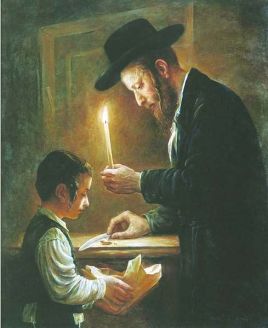 cleaned in anticipation of Pesach, while others still lag behind (This year, we are blessed to be among the former!). We are commanded to remove the chametz from our houses and we recite a passage after completion of this task declaring any other forms of chametz in our midst, aside from items that we may have arranged to sell to a non-Jew, ownerless. For many families, this activity is merely symbolic, taking very little time at all to complete. We know that any unaccounted chametz being found in our quarantined home is highly unlikely. There are those, however, who are engrossed in bedikas chametz for over an hour, scouring every possible landing spot for crumbs. No matter how long your search takes, we place ten pieces of bread around rooms where we would most likely encounter this nefarious 8-day foe, collect them all, and dispose of them the following morning. This is the best case scenario, as there have been accounts of those searching for the afikoman on Seder night discovering, to some horror and humor, pieces of bread from bedikas chametz which had been left behind. Nevertheless, despite the great care that must be taken to ensure that all chametz placed is found, the ritual stands, and the hunt is on.
Many sages have connected the commandment to eliminate the chametz from our houses with a charge of removing our spiritual chametz. Although this bedika is done with far less pomp and circumstance, it’s often a harder search to conduct. To cleanse our souls of chametz is to overcome our cynicism, doubt, and negativity and channel our energy back into positively serving Hashem.
I get the email every week like clockwork. I see it in my Gmail inbox and I fight every urge to not delete it right away. It’s not the worst email I’ve ever received: I’ve been chastised, ripped apart, and even told horribly sad news by email, both much worse than the message I’m currently glancing at. This message comes from the Tomchei Shabbos organization in my area, and it says succinctly “Can I count on you this week?” Some weeks I can swing it, while others weeks I am busy during the schedule of delivering food to those who need it weekly. Yet, for some reason, it would bug me. I agreed to take a route one week for Tomchei Shabbos. After having a hard time deciphering the exact location to unload my delivery, I arrived at my destination and exited my car with two heavy boxes. I held the handles on the side of the bottom box for no longer than three seconds before it ripped, and I scrambled to regain my hold as to not send both boxes tumbling to the ground. I ring the doorbell with trepidation as I wait for someone to answer. Nothing. I ring it again 30 seconds later, and I’m met with the same response, so I leave the boxes on the doorstep. I walk back to my car with a great sense of frustration. The GPS had no idea where to take me and I got lost, the box handles rip once I finally get to where I need to be, and then nobody even answers the door to get the precious package I shlepped?! I suddenly stopped in my tracks as I reached for the handle on the driver’s side door of my car. As much as it pained me to go through that ordeal, to take time out of my day and get home later than usual, the realization hit me like a ton of bricks.
You know what’s even more frustrating than this? Having to be on the inside of that door waiting for that package to come every single week.
What was I thinking? What was wrong with me? Since then, my attitude changed toward this holy endeavor, even though I cannot commit every week.
Rabbi Chaim Ezra HaCohen Fatchia, a mekubal in Israel known as the Chalban, has a poignant comment on the wicked son referenced in the Haggadah, as mentioned in his book on Pesach. The question posed by the rasha is, on the surface, not significantly egregious. “What does this labor mean to you?” Although the Hebrew “avodah” is used here regarding the work pertaining to the Korban Pesach, the Chalban writes that the hang-up expressed by the wicked son is the sheer work involved. What does this work mean to you? Why do you go through this year after year after year? When we consider the avodah to be laborious, to be painstakingly long, and nothing else, that is where we encounter a problem in our own “avodah.” But is this question so foreign to us? Do we ask of ourselves or of God what exactly is it that we’re doing and does it even make a difference? Hashem, what does this work that I’m doing even mean to You?! The behavior of the rasha can seep into our way of life, and permeate the very underpinnings of our spiritual aspirations. It’s our duty to erase this type of chametz just as we do with the leavened products in our home in anticipation of Pesach. It’s my hope that this type of chametz does not make its way back into our homes and into our souls after Pesach as the chametz we sell does.
 My first post on this medium was in commemoration of Yom HaShoah last year. After uncovering information about family members being killed in the Holocaust, I didn’t quite know how to process that information. My great-grandparents had come to America before the outbreak of World War II, and three of my four grandparents were born in this country. It’s not that it didn’t occur to me that it could have happened, but I don’t know why I was so shocked at this discovery. I needed an outlet for my feelings, and so I began this blog.
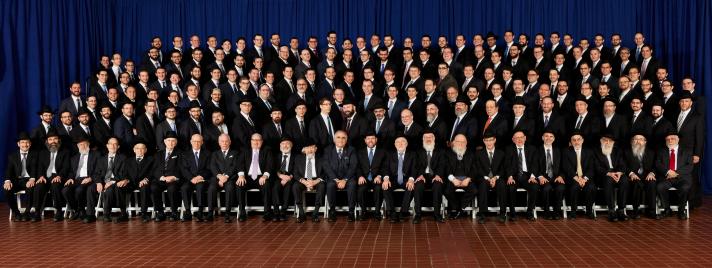

 The moment from the Chag HaSemicha that sticks out the most to me was the special award presentation made to Rabbi Hershel Schachter. This year marks Rav Schachter’s 50th year teaching Torah at Yeshiva University, an unbelievable accomplishment. But what made it truly special was the Sefer Torah that was commissioned in his honor and presented to him during the ceremony. One son carried the Torah down the aisle, flanked on both sides by a brother, until they reached the stage. They ascended, along with many of Rav Schachter’s granchildren, sons-in-law, and mechutanim, and the Eitan Katz led the entire room in song. Rav Schachter is a walking Sefer Torah, and it’s only fitting that he be presented with a Torah scroll, one that will be housed mere feet from his seat in the Glueck Beis Medrash.


 Shabbos Zachor holds a special place in my heart (especially when it falls out of Parshas Tetzaveh). No, I do not harbor a particularly strong internal love for remembering to destroy the memory of Amalek, but because my Bar Mitzvah was on Shabbos Zachor. The Halachic aspects of Amalek are interesting, to say the least. Rambam writes (in Hilchos Malachim and Sefer HaMitzvos) that we are commanded to erase the memory of Amalek from the face of the earth. Yet, the pasuk in the Torah from which this special parsha derives its name (Devarim 25 begins “Zachor es asher asa lecha Amalek.” Literally: “Remember what Amalek did to you!” The dichotomy between remembering what they did and blotting out all memory of this nation is peculiar. The Sifri comments that this message is twofold, based on the verse in Devarim. The first message, “Zachor”, pertains to remembering verbally, to speak about the horrible nature in which Amalek cruelly attacked Bnai Yisrael as they left Egypt, tired and weary. The second message comes from the last two words of the Maftir “Lo Tishkach” that we are commanded to not forget. This, according to the Sifri, means that we are to harbor this hatred for this nefarious nation in our hearts. Our disdain for Amalek is to continue to fester internally until they are no longer. While we don’t practice this commandment with gusto today, even the mere notion that we are to behave in such a manner proves how just how serious this commandment is. The Jewish people are not a vengeful, bloodthirsty nation. We are commanded against hating someone in our heart. We are told to be like the pupils of Aharon HaKohen, to love peace and to pursue it. Just a few mitzvot later in Rambam’s Sefer HaMitzvos discusses the commandment to try and reach a peace agreement before going to war! Yet, when it comes to Amalek, their deeds were too beyond the pale to simply ignore. It’s a puzzling mitzvah, but one we were commanded to do.


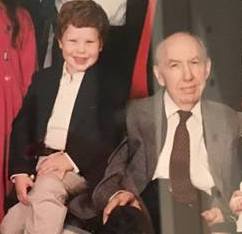


 The 17th of Shvat this year is when we read Parshas Yisro, and it marks the yahrtzeit of my mother’s beloved brother, my uncle Joel Radman z”l. Our parsha teaches us that as a leader, we are to act as holy individuals ingrained with a mantra of kedushah. Uncle Joel established the Chevra Kadisha in Columbia, MO, where he and my Aunt Sheri raised their sons. As a first-born himself, and the father of a first-born boy, he also ensured that there would be a siyum for taanis bechorim before Pesach. If anyone has heard of Mexico, MO outside of the state, it’s most likely because Cleveland Cavaliers coach Tyronn Lue hails from there. Uncle Joel cleaned up the Jewish cemetery there. Additionally, he was also a leader in other areas as well. Joel Radman was a titan in Columbia’s real estate industry, who saw incredible success in his endeavors. After his passing, the Columbia Board of Realtors created the Joel Radman Award. The award application mentions that
 Akiva Nechamtanu