Tu B’Shvat 5777 – The Song of the Olive

a3c97dacd675cbde74f39f331f1f2b56.jpgParshat Beshalach is known as Shabbos Shira, as it contains the passage recounting spontaneous praise levied to the Almighty by Moshe and Bnai Yisrael after witnessing the bifurcation of the Yam Suf. This year, it also happens to be Tu B’Shvat, the new year for the trees where we celebrate the trees, fruit, and plant life. The “shira” that I would like to reference in the coming essay is not found in the Torah itself per se, but is found in Perek Shira, a generations old text whose author remains unknown. The Gemara (Eruvin 100b) explains that had the Torah not been given to the Jewish people, the messages contained therein would’ve been able to have been gleaned by mankind from the animals such as the cat, dove, and other fowl. Perek Shira delineates 84 different creatures or things from which we can learn tremendous lessons about ethics, wisdom, and advice on seeing the hand of God. These items range in category from things in nature (sun, stars, moon, different types of clouds, dew, and others) to animals and insects, to plant life.

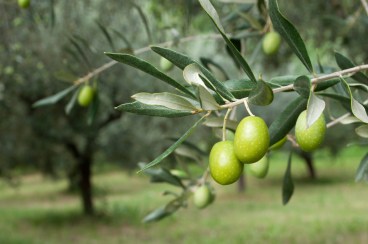
An interesting point in the middle of the various songs in the specific song of the “prolific creeping creatures”, as explained by Rabbi Natan Slifkin in his commentary. The praise which these crawlers offer is taken from Tehillim 128:3 “Your wife will be as a fruitful vine in the innermost parts of your house; your sons will be like olive shoots around your table.” The part that intrigues me here is the latter half of the verse. There are many different forms of shir and shevach that can be heaped upon a person and their children. What precisely is the meaning behind the wish that one’s sons should be like olive branches?

One could argue that the olive branch is a signal of peace or tranquility, as exhibited in the story of Noach and the flood. The decoded message of this particular bracha could be that our children should follow the ways of Aharon HaKohen (Avot 1:12) that they be “ohev Shalom v’rodef Shalom.” It’s not enough that they love peace-who doesn’t love peace? The second step is the kicker. They must also run after peace, and pursue it with every fiber of their being.

Another explanation for this song of these Sheratzim is that of the Talmud Yerushalmi (Kilayim 1:7), which explains that just as an olive branch cannot be grafted onto any other species of tree, so too the Jewish people cannot be “grafted” to any other nation other than ours. The worlds may share similarities, but they are separate. To merit generations of committed Jewish souls is indeed a wonderful blessing.

Another interesting note about the olive is that it’s not mentioned on its own as one of the items that gives praise to Hashem in Perek Shira. At first glance, that might not be such an egregious omission, until one reads through the rest of the work to learn that each and every other one of the seven special food items indigenous to Eretz Yisrael have their own shira. The above mentioned passage pertaining to the olive is one of two places where an olive is brought up, yet it does not muster up an original prayer like the other of the shiv’at haminim. Six out of seven ain’t bad, right?  

Rabbi Avraham Schorr (HaLekach VeHalibuv Chodesh Shvat/Shovevim) posits that perhaps this omission stems from the Gemara (Horayos 13b) where it’s written that olives are one of five items that make one forget their Torah learning. However, contained in the next passage is that olive oil is one of the antidotes to this problematic food. The Maharsha on this sugya alludes to the fact the olive is not worthy of praise on its own because it’s the oil that comes from grinding and squeezing the olive that makes it special.  It’s what’s inside that counts. The inside of the olive is the key to producing the olive oil that we desperately need both as food and for our ritual use. The olive is rendered essentially unrecognizable and only then can the oil be squeezed from it.

The missive elicited from the words of the Maharsha is poignant not only for the puny olive, but for the individual as well. The yuntif of Tu B’Shvat is not merely a day in which we contemplate about the various trees and plants that Hashem set on earth. It’s a Rosh Hashannah! It’s the dawning of a new era, where we can take the same ideas we apply in Elul and Tishrei and work to bring out the best in ourselves. The best way to ensure that one makes a strong commitment to become a better Jew is tapping deep into one’s potential. Olives are delicious, and when they’re on pizza, that’s some of the finest cuisine you’ll find. Yet, they’re lacking until they’re pulverized and pressed in order to extract their valuable oil. We need not go through the rigorous process they do, but that process is indeed a powerful mashal for us as well. Getting what we want or need in life may at times be a struggle. What we have inside, our heart, intellect,and spirit, will not deter us.

The message of the olive is that sometimes, the most important thing is hidden from the surface, and takes great, painstaking work to elicit.
VaEra 5777 – Gevurah, Moshe Rabbeinu, and My Grandmother

226777_4024891587376_551459411_n.jpg

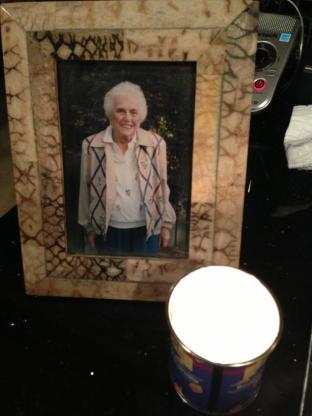
The 27th of Teves marks the yahrtzeit of my Grandmother Ida Radman z”l (Chaya Tzivia bas Yehoshua). She was taken from this world 14 years ago today on the Jewish calendar, New Year’s Day 2003, which effectively put a bit of a damper on the whole year. My Grandma Idee was a fierce woman who made the most incredible potato knishes I’ve ever tasted, and to this day, I haven’t found any better.

There are two things from this week’s parsha, VaEra, that stuck out to me when I think of my grandmother. The first is the seemingly trivial mentioning of the ages of Aharon and Moshe. In discussing the game plan for the brothers to meet with Paro, the Torah records that Aharon was 83 years old, and Moshe was 80. Before teaching these pesukim to my students, I would ask them how old they thought Moshe and Aharon were when the whole plan was set in motion. The overwhelming response was that the brothers were most likely young, valiant leaders. We see here, that by today’s standards, Moshe and Aharon would’ve been relegated to celebrate their years and accomplishments. Yet, putting aside the fact that people generally had longer lives during those times, their journey only began at such advanced ages. At a stage in life, when we consider people of their years to migrate South, the brothers were just beginning their ascent to leadership of the Jewish people. Their crowning achievements had yet to come.

Although seemingly unimportant, I believe that the Torah’s account of Moshe’s age is anything but. Pirkei Avos (5:21) teaches that at the age of 80 one gains gevurah, strength. Moshe Rabbeinu had lived a life of ups and downs. Much has happened to him since he was found by Bas Paro in a basket floating along the river bank. This is not to say that he didn’t possess gevurah before, but Moshe at age 80 is granted an extra level of strength to tackle the seemingly impossible task of going to Paro. Rabbi Soloveitchik adds on this point of Pirkei Avos that gevurah in this context can also mean courage. Moshe Rabbeinu at the age of 80 would be privy to courage from the Almighty that would enable him to stand up to the tyrannical Egyptian leader.

My grandmother passed away at 80. As her tafkid in life was coming to a close, Moshe Rabbeinu’s tafkid was about to take flight. She channelled this gevurah well before her 80th year. My grandmother lived a full life, but one not devoid of tzaros. My mother z”l was sick constantly as a child. She outlived her beloved husband. She buried her son, her bechor, my Uncle Joel, whose tragic passing shocked the entire family. Yet, she took everything life gave her in stride, with great strength and courage. Paraphrasing her own motto that she’d repeat, in life “If it’s not one thing, it’s another.” Things constantly come up and throw our world into a state of disarray. It’s our job to ensure that we maintain some sense of homeostasis, and be able to regroup and move forward. These are words that are emblazoned and engrained into my being.

Enhancing this gevurah is the second point that, to me, connects my grandmother with Moshe Rabbeinu. The interplay between Moshe and Hashem features Moshe beseeching Hashem to send someone else in his stead to converse with Paro because of his speech impediment. Moses does not feel adequately equipped to be the vessel to carry the message to the ruthless ruler of Egypt. God quells His faithful servant’s anguish by informing him that he should speak to his brother Aharon, who will serve as his mouthpiece. Even though there are barriers to communication, the message shall still reverberate.

My grandmother was racked with impaired hearing from the time that she was a child. Yet, this deficiency was something that she did not let keep her down. When we would visit her, or when anyone would speak to her, we’d speak very loudly. She could read lips. Even the fact that she lived in Missouri and Michigan, and her family in different states didn’t keep us from communicating. I distinctly remember that when we wanted to call her, we’d dial a service where an operator would transcribe our message for her to read on a screen, enabling for seamless conversation. Although, at times, we’d talk loudly into the phone as if we were talking to her in person, since we could hear her voice. I’m not sure the operators would appreciate having to hold their phones or headsets away from their own ears to escape the deafening sound. Despite external factors precluding the possibility of conversation or comprehension, we were blessed with the ability to do so.

Those phonecalls, like her mandelbread, are no more.

We miss her dearly, and hope that her neshama has an aliyah on this day, as she looks down her family with my Grandfather, uncle, and mother. May we be strengthened by the courage of Moshe and Aharon to take face situations as they come, just as my grandmother did.
Yehi Zichra Baruch

Chanukah 5777 Part IX: Post Chanukah – Maalin Bakodesh Ve’ein Moridin

IMG_8482.JPG

Just when we finally start remembering Al Hanissim, the festival of Chanukah is over. The scent of olive oil may still waft through our houses, yet there will be no ninth candle kindled tonight, and no dreidels spun.

One of the miracles that we commemorated over the course of Chanukah is the neis pach hashemen. There was only enough oil to last one day, but through the miracles of the Almighty, the menorah remained aglow for eight days until there was once again oil that was fit for Temple use. After those eight illuminated, joyous and magical days, people went on with their lives and tried to rebuild after the havoc wrought by the Greeks. We too, are now moving on. If the holiday of Chanukah is known for the light that it brings, we are now enveloped in darkness, the same glaring darkness that consumed us the day before we lit our first candles and a host of other times prior. But that’s only true if we give way to the darkness and let it settle into our lives.
There is a well-known dispute found in the Gemara as to how we ignite the Chanukah lights. Beis Hillel is of the opinion that we are to light one candle on the first night of Chanukah and add another each night, while Beis Shammai rules that we are light eight candles on the first night and descend until the cessation of the holiday. Ultimately, we follow the opinion of Hillel, who explains “Maalin bakodesh ve’ein moridin”, that pertaining to matters of holiness, we ascend and do not go down. True, the transition from the eighth day to the ninth night marks the end of Chanukah, yet we also should mark this time as the catalyst for dispelling the darkness in our lives, our own daled amos and beyond. “Maalin bakodesh ve’ein moridin” is not a concept exclusive to the mitzvah of ner Chanukah: it’s a state of mind. It’s the mantra that must be ingrained in the fibers of our very being. We go up, but we never go down. One need not look very far to encounter the darkness. It may be around us, but we do not let it in, we must not let it in, even for a moment. No light is too insignificant to conquer the pitch black. We must turn off the darkness, and turn on the light. Our chanukios may have used up the last of the oil for this Chanukah, but that doesn’t mean the kedushah stops here. Just like the flames, maalin bakodesh–ve’ein moridin. Period! Mosif veholich leolam vaed!

Chanukah 5777 Part VIII – Zos Chanukah: This Is Chanukah

IMG_8477.JPGZos Chanukas Hamizbeach, This was the dedication of the Mizbeach. In my head, I imagine this being proclaimed just as the Jeopardy announces “This is Jeopardy.” We always seek to finish strong with something we’ve started, whether it’s a workout or a school project. The eighth and final day of Chanukah is an auspicious time indeed, arguably one of the most powerful days of the entire holiday, according to many of our sages. Many Chasidic commentaries record Zos Chanukah, the last day of Chanukah, as being the day in which our gmar din is sealed for good (there even exists a minhag among Chasidim to greet others with “gmar chasima tova” or “gmar tov” on this day). The Ruzhiner Rebbe, one of the most regal Chasidic leaders of the 1800’s, is quoted that the holiness and splendor that is imbued in Zos Chanukah is parallel to that of Rosh Hashannah and Yom Kippur. The word “zos” from today’s Torah reading parallels two pesukim which, to me, can help crystalize this connection of the holiness of the Days of Awe with Zos Chanukah. The first comes from Yeshayahu “zos yechupar avon Yaakov”, with this shall Jacob’s iniquity be atoned for. Rabbi Gavriel Zinner, in Nitei Gavriel on Chanukah, bases this idea from passages in the Bnei Binyamin, and works of Rabbi David of Dinov and the Bnei Yissaschar. By reading of Chanukas Hamizbeach, we strengthen ourselves and our commitment to the Almighty, a step which grants us atonement for our iniquities.

The second pasuk that Zos Chanukah connects to comes from Tehillim (27:3) “Bezos ani boteach, In This I trust.” The Medrash Rabbah points out that the “zos” here refers to God, that, as our currency tells us, In God I Trust. The Chashmonaim fought valiantly against the mighty Greek militia. By no means did anyone around them think they would win. The Chashmonaim, with their intense devotion to Hashem, knew they had to fight as hard as they could in order to stand up to their aggressors. Their belief in God springboarded a religious renewal for the Jewish people following the victory over the Greeks. It’s a renewal that we can channel into this day contemporarily.

May this Zos Chanukah be one that strengthens our emunah, as well as our ability to turn back to Hashem in teshuvah, even after the Yamim Noraim. Gmar tov!


Chanukah 5777 Part VII: Shabbos Chanukah and The Kohanim Gedolim

IMG_8475.JPG

On Shabbos Chanukah, or the first Shabbos when Chanukah is spread over two, the haftorah is taken from the book of Zechariah. Among the interesting things going on in these chapters is a vision which shows the Yehoshua, the next Kohel Gadol in filthy, soiled clothing. These garments are to be removed from him before he is to ascend to become the High Priest. While it is understandable why he would need to disrobe from these dirty clothes before taking on such a role, Chazal have interpreted this as Yehoshua being commanded to inform his children that they should divorce their gentile spouses. This interpretation is indeed puzzling. Typically in Judaism, the actions of one’s children cannot disqualify them from serving Hashem. Therefore, the question arises as to why this command is given to Yehoshua’s children.

Rav Moshe Soloveitchik explained in the name of his father, Rabbi Chaim Soloveitchik, that by marrying gentiles, Yehoshua’s children had denied the very fundamentals of the Jewish faith, something that cannot receive atonement. During the Temple service of Yom Kippur,  the Kohen Gadol seeks to have his entire family be forgiven for their various transgressions, yet this is only on the condition that actually are engaged in teshuvah. If Yehoshua’s children were still married to their non-Jewish spouses, he could not achieve atonement on their behalf. Only after these unions were annulled could Yehoshua even perform the Avodah, the most sacred of work.

The Rav records an interesting note, an additional miracle of Chanukah, one that is often overlooked. In the introduction to his laws of Chanukah, Rambam writes of Mattisyahu’s sons that they were “Bnei Chashmonei HaKohanim HaGedolim” or High Priests. At one time, there can only be one Kohen Gadol. Why does Rambam write that all the sons were Kohanim Gedolim? Rav Soloveitchik writes that Rambam is alluding to the fact that each of the sons were eligible to become the Kohen Gadol. Much like the miracle of finding a single cruse of pure olive oil, finding a family that was not touched by the rampant assimilation that permeated Jewish life at that time, was itself also a neis.

Chanukah 5777 Part VI: Not Just a Toy

IMG_8462.JPG

The dreidel is a fundamental part of the holiday of Chanukah. We are taught from a young age that this toy was kept at the sides of the Jews as they clandestinely learned Torah, which had been outlawed by the Greeks. When the Greeks came by, the Jewish people would take out their dreidels and play, fooling the Greeks all the while. Outside of Israel, our dreidels are stamped with the letters “nun”, “gimmel”, “hey”, and “shin”, and we commonly explain that this spells out “Neis Gadol Haya Sham, The Great Miracle Occured There.” The Bnei Yissaschar comments that the letters are referring to something greater than this adage, that they refer to the four primary parts of an individual. “Nun” stands for neshama, the soul. “Gimmel” for the guf, the body. “Hey” stands for “Hakol, the Divine ruach that permeates our being. Finally, “Shin” refers to seichel, the intellect. Each Jew is given these four things that uniquely make them who they are. (As an aside, Rabbi Ephraim Nisenbaum [rabbi and author based in Cleveland] writes in his book “But I Thought…” about misconceptions in Halacha, that given this explanation of the Bnei Yissaschar, it could be that the dreidels in Israel should be the same as the ones in the diaspora. He lists other reasons as well in his book.) I like to think that the reason for this explanation can be extended to the fact that the dreidel was not merely a plaything in these times. It literally saved lives. The study of Torah had been outlawed by the Yevanim. Had the Jews been caught in the midst of their limud, it would’ve been calamitous.

Chanukah 5777 Part V: Days of Joy

IMG_8452.JPG

Chanukah is listed as period where we thank God for the glorious salvation that was afforded to the Jewish people at the time of the Chashmonaim. There is an added element of simcha during this time as well. It’s widely known that this is a time, like other times of great Divine miracles from our history, we refrain from delivering eulogies. Rabbi Avigdor Nebenzahl, mentions that that it’s not only limited to that. He quotes Rabbi Yosef Chaim Sonnenfeld, who maintains that this is a time where we aren’t even supposed to share bad tidings. This sense of tranquility is sometimes hard to do on Shabbos, our respite from a busy week, where we seek to create a serene environment without sadness for 25 hours.  On Chanukah, where we’re engaged in melacha all the while (excluding Shabbat and while the lights are kindled) this is a much more difficult task. I’d like to extend this further posit that we should also exclude any machlokes from these eight holy days. The Shelah HaKadosh comments in Shemos on the words “lo sevaaru eish bechol moshvoseichem byom hashabbos” that we are to not light any fire on Shabbos, that this aish, or fire, refers to the aish of machlokes and kaas, the fire of dispute and anger. He says that these embers of should be far from our hearts, and they are things that should not be part of our weekday routine. The holiness of Shabbat is cannot be compromised because of these sparks of dispute and anger. Just as we careful about doing work while the candle flames are lit, we should also keep in mind to stray far from the flames of sadness and disagreement.

Chanukah 5777 Part IV – If You Don’t Use It, You Lose It

IMG_8447.JPG

In Maoz Tzur, we sing a line that starts “Yevanim Nikbetzu Alai”, The Greeks gathered around me. Rabbi Avraham Schorr (Halekach VeHalibuv Chanukah Vol. 3) writes that there are a multitude of points to gain from this verse as it pertains to the very mitzvah of Chanukah.

Yevanim Nikbetzu Alai is a statement of Achdus, of coming together, as it’s written about Yaakov (hikabtzu veshamu bnei yaakov). Rav Schorr writes that Achdus, this kibbutz so to speak, is a special entity that only Klal Yisrael is privy to and not found in regard to the other nations of the world, making the statement of the Greeks banding together as one seemingly confusing. We know that Bnai Yisrael are “Goy Echad Baaretz”, we’re considered as one people, while the rest of the world is spread apart. When the Torah records in reference to Esav of the “nefashos” of his offspring (Breishis 36:6), whereas Yaakov’s children are mentioned in the singular “nefesh” across Chapter 46. Rashi here mentions that Esav had six souls in his family, and they are mentioned in plural form because they worshipped many gods. Yaakov, on the other hand, had 70 souls in his family, yet they were called by a single soul because of their devotion to the Almighty.

Now that we see this concept of connecting as one as relating to Yaakov, how is it possible that the Greeks could’ve stolen away this entity of kibbutz solely destined to the Jewish people? Rav Schorr writes that if we as a nation are divided and apart, this idea of togetherness can be taken captive by the umos haolam, and used against us. He supports this postulation with an idea from the Chiddushei HaRim, who quotes the Sfas Emes. When a new king arose over Egypt and did not know Yosef (Shemos 1:8), it’s commonly explained as this new ruler was either an entirely new king or the very same king as before who, Nischadshu Gezeirosav, just happened to have enacted new decrees. Sfas Emes is puzzled by the ability by the king to enact new gezeiros, as this idea of Nischadshu, was also a trait unique to Bnai Yisrael. Yet, if this trait is squandered or underutilized, it can be taken away by those who seek to destroy us.

If we don’t use our collective prowess for achdus, it can be stolen and used to defeat us.

Rav Schorr continues that this can answer the question of the Pnei Yehoshua as to why the Chashmonaim were so vigilant in their pursuit of Shemen Tahor, pure oil. There exists in Jewish law a halachic position of “tumah hutrah betzibur”, that the ritual impurity of an item is nullified and outweighed by the general communal need for that object. There was a great need to light the Menorah, and there were plenty of other containers of oil that had been defiled. Why couldn’t this idea be put in place here, and the Chashmonaim have used this impure oil for the communal need? Rav Schorr answers sharply and poignantly. If Klal Yisrael was able to shirk their communal achdus, their din of “nikbetzu”, tumah hutrah betzibur would not apply in this instance: there’s no tzibbur, no broader community. If the Jewish people fell so low in our unity that we were able to be attacked by another group gathering together against us, there is indeed no kehillah to speak of.

Rav Schorr writes later in this volume that the words “agudah achas”, like we say in our Yamim Noraim davening, parallels numerically in Gematria to “Mashiach ben David.” This point of “Nikbetzu”, of remaining connected and unified as a people, is not merely a nice idea that has roots in the Torah with Yaakov Avinu: it’s the very key to our ability to bring about the ultimate redemption.

Chanukah 5777 Part III – Igniting the Flames, Illuminating Our Souls.

I’d venture to say that when most Jews think of Chanukah, their eyes light up. After all, is one of the most jubilant times on the Jewish calendar, complete with eight nights of presents and a tremendous amount of culinary delicacies. However, while we revel in the festival of lights, it’s important to remind ourselves that this is time during the year that could’ve ended much differently.
Let’s travel back to the time of the Chashmonaim and try to make sense of what was going on. Klal Yisrael were being attacked by the Greeks, who cared significantly more about eviscerating their connection with the Almighty than they did about killing them. We recite in Al HaNissim “LeHashkicham Torasecha, Lehaaviram mechukei retzonecha” that Yavan tried to uproot the ways of torah and mitzvot that permeated Jewish life. The Temple, the glorious edifice where our nation came and served God, had been defiled. Only through the ferocious fight of a small band of Jews did the battle ultimately cease, and against all odds, they won. This military battle ushered in a great era of reaffirming Klal Yisrael’s connection to Hashem, yet it all could’ve never even happened had the Chashmonaim not been staunch in their effort to reestablish the Temple for ritual use. 
When tragedy befalls the collective nation, even when good is brought about because of it, there are those who seek to find the harbinger for this event. This is not a contemporary phenomenon, yet an idea that is present at Chanukah time as well. The Bach (Orach Chaim 670:4) comments that the reason that the Greeks were successful militarily in their conquest of Bnai Yisrael was because the latter had become lax in their spiritual observance of Hashem’s commandments. The real miracle, maintains the Bach, is not that there was one pure jug of olive oil to be found in the carnage that was left in the Beis Hamikdash, nor was it the fact that this oil kept the Menorah lit for eight days. The true miracle was that the Jewish people did teshuvah and began observing mitzvot again with great fervor.
The comments of the Bach rattle me greatly. There aren’t the musings of a modern-day rabbi who people consider to be an outlier. He’s an individual whose commentary on the Tur is printed right next to the text! The fact that the Jews endured such decrees and damage from Antiochus was because of their laxity in regard to ruchnius is so frustrating to me. There are so many ways that a Jew can have a strong connection to Hashem. 
The Jewish people have 613 mitzvot, yet we know that in reality, there are offshoots of those original commandments and we have even more mitzvot than that. Why so many? What’s the point of having so many mitzvot? If we’re to keep them all, wouldn’t it be better for us if we only had a few mitzvot to adhere to? The Rambam, in his Peirush HaMishnayos at the end of Maseches Makkos, brings up a very poignant idea. If there were only a small handful of mitzvot that were given to the Jewish people, there would be a tremendous amount of pressure to strictly keep them all (think Adam and Chava in Gan Eden in regard to the Etz HaDaas). If we were to transgress one of those commandments, we’d be frustrated and dejected while at the same time, not following the word of God. By having so many mitzvot, even the most nefarious of characters is bound to do a keep some of them. At the same time, we can’t stress about not being able to do all of the mitzvot as no individual is able to complete all of them! There are mitzvot specifically designed for men, women, Kohanim, Leviim, bechorim, those living in the land of Israel, and others. Not even the most pious of figures can do every one of them. There is something here for everyone, an area of mitzvot where everyone can excel. 
Rabbi Avraham Ausband, Rosh Yeshiva of the Yeshiva of the Telshe Alumni in Riverdale writes that when Klal Yisrael returns to a time of the year when the Jews of old merited a significant spiritual energy, we too are able to capture that power for ourselves today. The Jews at that time could’ve seen their brethren be victorious in a war they weren’t supposed to win as mere luck. They could’ve been downtrodden about their lot of being persecuted. They could’ve ran away completely from any semblance of shmiras hamitzvos. Yet, they did just the opposite, and ran toward the chance to reaffirm their kesher with the Ribono Shel Olam. Just as the Jews rededicated themselves to mitzvah observance, may we be zoche to do the same, and use this time of tremendous historical nissim to bring about salvation in lives as well. 

Chanukah 5777 Part II- Identical, Unique, and Completely Different

IMG_8409.JPG

Over the past couple of weeks, my 5th grade students have been putting on skits to reenact what we’ve been learning in Chumash class. At one point in preparing for their performances, one student was puzzled. “We’re all working the same storyline. It’s not fair! All the skits are going to be the same!” Before I could respond to my perplexed pupil, another one of my students chimed in and without missing a beat responded “Just because it’s the same story in the same perek doesn’t mean it will be the same skit. Each group will add different things and act out scenes in ways that other groups won’t.” Reflecting on this very mature answer, it occurred to me that this was a poignant reflection in regard to Chanukah.

Throughout the eight days of Chanukah, our Torah reading is taken the passages of Bamidbar that relate to the korbanos that were given by the Nesiim on the inaugural day of the Mishkan. The first offering was given by the Nasi of the tribe of Yehuda and this continued with the different shvatim for eleven more days when the final offering was brought by the Nasi of Shevet Naftali. The aliyot are repeated virtually verbatim, except for exchanging each tribe and Nasi and sometimes other small differences. Anyone who has been at Shacharit on any of the mornings of Chanukah can basically lain the entire torah reading. At times, the communal cacophony following along becomes almost as notorious as the Rosh Chodesh reading or the Pesach “Ka’Eileh.” The commentators are curious: if the korbanot that each tribe brought were identical, why does the Torah list each tribe’s offering in detail. Our sages tell us profusely that the words of the Torah are meted out very carefully, and there is no extra letter, word, or phrase. Couldn’t the fact that each Nasi brought the same korban have been mentioned in a single pasuk?

Ramban answers that to the casual reader, each offering seems identical, yet the kavanah, the specific intention devoted to korban was anything but that. Each tribe was different, and their offerings took on different nuances. The tribe of Yehuda was the tribe of Malchut, of majesty. The kavanah of the korban that Nachshon ben Aminadav gave was in the spirit of nobility and royalty. This is the same in regard to Yissachar being the shevet of Torah, and the korban of this tribe included the kavanah of Torah elements.

Twelve tribes. Twelves identical korbanot. Twelve entirely different kavanot.

This is an idea that we can relate to our Avodat Hashem as well. At times, it’s not unusual to feel that our formal prayer structure is very limiting. We say the same tefillot every day, three times a day. Granted, there are different additions and omissions for various holidays and occasions, but for the most part, our davening structure can be seen by some as being a little rigid. Yet, each person approached tefillah differently. While I daven, I may be saying the same words in the siddur as my neighbor, but there presumably different thoughts going through our minds. As we traverse through the Amidah or any other part of the siddur, we have different kavanot in different places. With this idea in mind, every one of us can capture the grandeur of the korbanot of the Nesiim, and find ways to imbue tremendous additional meaning to our own individual tefillah.