VaEra 5778 – On Par

Image result for moses and aaron prince of egypt

One of my favorite insights on the Torah is found in this Parshas VaEra. At the urging and prodding of Hashem, Moshe and Aharon begin their quest to see the Jewish people freed from slavery in Egypt. As they are present figures throughout the Parsha, there is a small yet poignant inconsistency, one that at first glace may seem trivial.

At the beginning of the Parsha, the psukim state: “That is Aaron and Moses, to whom the Lord said, ‘Take the children of Israel out of the land of Egypt with their legions.’ They are the ones who spoke to Pharaoh, the king of Egypt, to let the children of Israel out of Egypt; they are Moses and Aaron. (Shemot 6:26-27). The order of their names are switched around. It’s understandable as to why Moshe would be mentioned first since Hashem called to him and spoke to him directly. Conversely, as the elder brother and mouthpiece of Moshe, it was Aharon who could’ve been portrayed as the leader of the two to Paro and Bnai Yisrael. We could also imagine a scenario where the order of their names has no significance at all. When parents refer to their children, or teachers to their students, there may be no rhyme or reason as to the order in which they are mentioned. Nevertheless, Rashi explains to us that there is indeed a reason for this seemingly minute detail. He comments that there are times when Aharon is listed ahead of Moshe, and there are times when Moshe is listed before Aharon and it’s because the two are considered equals.

Does this make any sense at all? How were the two considered to be on par with each other? Moshe Rabbeinu was summoned by God to lead the Jewish people. Ultimately, he became the greatest leader the Jewish people have ever seen. Aharon, no slouch himself, was the Kohen Gadol who performed the work in the Mishkan. Despite the best of intentions, Aharon is also known for his instrumental role in bringing about the sin of the Golden Calf, arguably the worst of the calamitous deeds done by the Jewish people. The distinguished two brothers shared lineage and lived at the same time. This alone puts them on the same plane?

Rav Moshe Feinstein explains that Rashi’s point is profound. How is it possible that they were equals? They both were able to maximize their potential greatness. Indeed Aharon did not serve in a role like Moshe Rabbeinu, but the expectations of him were the same as what was expected of his younger brother. Aharon was not supposed to be as great as Moshe. His role was to use his kochos to be the greatest Aharon he can be.

This is a timeless message for all of us. Much of our self-worth is based upon the success of those around us. Whether their success is something we see or highlighted to us by those close to us, it can be unbearable when we try and measure ourselves to the standards they have, many times, unknowingly set. It may not be our role to occupy the same place as those vaunted ones around us. Still, it’s imperative to remember that Aharon HaKohen was a tremendous individual, not an underachiever by any means. We cannot sit back and rationalize our inertia by claiming that living up to high standards is not what we are destined to do. We have been endowed with strengths and abilities for specific purposes. It’s up to us to make sure we utilize them correctly.


Shemos 5778 – Good Chutzpah

Image result for midwife

If one were to look up the word “chutzpah” in the dictionary, you’d most likely find something to the tune of “audacity” or “impudence.” We don’t often think of chutzpah as a good or praiseworthy thing. When a child is out of line or “chutzpadic”, parents will most likely not revel in their brazenness. These feelings don’t necessarily subside as one ages. Conversely, there are also times when one’s chutzpah can be have positive dividends. In the Purim story, without Esther marching unannounced into Achashverosh’s chamber, where would the Jewish people be today? Even before that brave act of heroism, there is a staunchly “chutzpadic” episode in Parshas Shemos, one that is amplified by carefully reading the text itself.

Parshas Shemos is a “busy” parsha. There is so much going on, so many important events that are found among the pesukim. Gone are the days of peace and tranquility for Bnai Yisrael in Egypt. There is a new ruler, who has a different approach in regard to the ever expanding Jewish people. As they begin to outnumber the Egyptians and as the king’s attempts to outsmart the Jews fails to stunt their tremendous growth, he summons Shifra and Puah, two Jewish midwives, and gives them a horrifying task. All male Jewish babies are to be put to death, at their hands. For individuals charged with helping bring life into the world, their new job is to snuff it out.

Rashi explains that Shifra and Puah were not their actual names, but nicknames given to Yocheved and Miriam for their roles in caring for children. Shifra, from the word “meshaperet,” because she would clean the children and make them look nice for their mothers. Puah, from the word “poeh,” because she would soothe the babies when they cried. The Torah tells us that these midwives were God-fearing and were not keen on following through with the will of Paro. The pasuk says “vatechayena es hayeladim.” Not only did the midwives not kill the baby boys that were born, they enabled them to live. Despite the direct decree given to them by the most powerful individual around, Shifra and Puah actually took steps to ensure their survival.

Disobeying a direct order from the highest office is no small feat. It is the epitome of chutzpah. When someone acts brash with us, we can usually brush it off and go about our business. It’s almost certain that if we were in a unique position of power, the behavior exhibited from the subject in question would’ve been different. Nevertheless, Shifra and Puah knew what they were doing. There was no misunderstanding.

To be fair, despite the pasuk mentioning that the midwives had a fear of God, they could’ve simply done nothing. They could have helped the women give birth and simply not cared for the children as they normally had done, or taken them away and hid them without feeding them. Technically, the mandate of Paro would’ve been fulfilled passively, as the babies would’ve eventually died. Yet, Rashi continues that Shifra and Puah acutally fed the children and gave them water, with complete disregard for the explicit wishes of Paro. This insubordination could’ve led to severe ramifications for these holy women. Yet, rather than put them to death, Paro angrily wanted to know why they had not acted as he wished. They explained that the Jewish women are not like the Egyptian women when giving birth.

For their actions, the Torah tells us that the midwives were blessed with “batim,” houses of Kohanim, Leviim, and Malchus descending from them. In turn, the Jewish people were blessed to survive that heinous decree, among the others from Paro. It is through their chutzpah that Klal Yisrael are here today.

Vayechi 5778 – V’Yidgu LaRov Bekerev HaAretz

Image result for fish

In Parshas Vayechi, the final parsha in Sefer Bereishis, Yaakov Avinu is at the waning moments of his life. He blesses his grandsons Ephraim and Menashe, and in their bracha he gives them a unique wish. The famous bracha turned contemporary Jewish song (48:16): “May the angel who redeemed me from all harm bless the youths, and may they be called by my name and the name of my fathers, Abraham and Isaac, and may they multiply abundantly like fish, in the midst of the land.” Rashi here writes that the blessing refers to fish, who proliferate and multiply, and additionally, are unaffected by the concept of ayin hara.

Rabbi Pinchas Friedman, the Rosh Kollel of the Belzer Kollel in Yerushalayim whose shiurim are published as Shvilei Pinchas, connects three instances found in different passages of the Gemara that can shed great light on the hidden magnitude of this bracha.

Fish can serve as an example in our quest to greater connect to Hashem. This is portrayed in Avodah Zarah (3b) where Rav Yehudah in the name of Shmuel asks why human beings are compared to the fish of the sea. The answer recorded in the Gemara is that it’s to teach that just as the fish of the sea will die if they go up onto dry land, so, too, do Jews who disconnect themselves from Torah and mitzvos will meet the same fate.

This “flows” to Bava Kamma 17a which records “There is no water other than Torah, as it says (Yeshayahu 55:1): ‘All that are thirsty, go to the water.’” 

Finally, Kiddushin 30b notes that “Hashem said to Bnai Yisrael: ‘My children, I have created the yetzer hara and I have created the Torah as its antidote; if you engage in Torah-study, you will not fall prey to it.’”

Fish can only survive in water. We, too are charged with staying in the “water”, the vast ocean of Torah. The fish, as Rashi explains, does not succumb to the ayin or yetzer hara. Our remedy to falling victim to the yetzer hara is limud haTorah. The message is clear to us: if we are to abandon the waters of Torah, we cannot survive.


10 Teves – The Beginning of the End

IdDx9279927.jpg

Today is Asara B’Teves, one of the minor fast days on the Jewish calendar. Chazal tell us that this day, however, is anything but “minor.” While today’s date is a calamitous one, it’s an amalgamation by the rabbis of three straight days of sadness. On the 8th of Teves, the Septuagint was brought about and the Torah was translated into Greek. On the 9th, Ezra HaSofer passed away. Finally, the culmination of these three days of pain is on the 10th day of the month, when the siege of Jerusalem began, which ultimately led to the destruction of the Temple.

The Lubavitcher Rebbe would use this day as a time for inspiration and soul-searching as an impetus for teshuvah. One possible way to do this is through Torah study. Rav Shalom Rosner quotes Rav Mattisyahu Salomon that the events that we mark on Asara B’Teves all moments that weakened us spiritually. The translation of the Torah into Greek made our holiest text lose its luster. It may have been a miraculous event that when the 72 elders were placed into different chambers, through Divine inspiration they were able to all create identical translations. Nevertheless, there are many times when even the most talented rendering leaves much to be desired from the original text. Similarly, the passing of Ezra HaSofer was another hit. He was a tremendous prophet who brought thousands of Klal Yisrael back to Jerusalem. Lastly, when it comes to the destruction of the Beis Hamikdash, one does not need to delve too deeply to uncover the deep pain that was borne out of this event.

Although it’s one of the four minor fast days that exist on our calendar, Asara B’Teves is unique. Our sages (Beis Yosef and Abudraham) teach that it’s different in nature and the most stringent of the four. This is evident by the fact that it’s the only fast day that occurs on Erev Shabbos and is not pushed off to a different day. Although it cannot fall on Shabbos, Abudraham notes that if it did, we would indeed have to fast. He proves this by comparing Asara B’Teves to Yom Kippur since in relation to the two fasts, the same word “B’Etzem, on that very day” is mentioned. When Yom Kippur occurs on Shabbos, we indeed fast. Additionally, Abudraham’s notion is buttressed by the attribution of this day as the beginning of the catastrophic events that would eventually befall the Jewish people with the destruction of the Beis Hamikdash. It was the beginning of the end.

Yet, if we take the above message of the Lubavitcher Rebbe to heart, this day could be the catalyst once again for “the beginning of the end.” The end of our suffering in exile, that is. A taanis is a reminder to us that there is something wrong in the world, even if it happened many generations ago. It’s an opportunity for us to reflect on our role in bringing about the redemption of the Jewish people. We cannot do it by ourselves, but the light that we bring into the world through our actions can be momentous.

May we speedily see the day when the 10th of Teves is no longer marked as a somber day on our calendar.

Vayigash 5778 – All Will Be Revealed

Image result for flock of sheep

How many of you like surprises? I grew up in a house divided. My father is one of the most prepared people I’ve met in my life. Needless to say, he’s not always the biggest fan. One year, my father began a new post at work. My mother took it upon herself, with the help of a family friend, to orchestrate a massive surprise party. My father was shocked and happy but still care for surprises. My mother was more easy going and always appreciated a good surprise. A few years ago, again with the help of the same family friend, we pulled off a massive surprise party for her. She was elated, and had no idea of our ruse. I tend to find myself in the latter camp. Before I got married, a group of my closest friends from childhood came to New York and took me out to dinner and to an arcade a little bit before my wedding. It was one of the best experiences of my life.

When you’re part of a surprise, there’s an excitement, an exhilaration that you feel when the guest of honor so to speak enters and you can reveal your plot. You wait with bated breath, often times lamenting that the moment is not yet there. Usually, we associate surprises with happy occasions. A surprise birthday party, surprise engagement, surprise pregnancy announcement. But there are times when surprises are not seemingly too happy.

The drama at the beginning of Parshas Vayigash is tangible. Yehuda leads the charge, pleading the case of being kept in jail in Binyamin’s stead in order to pacify the Egyptian leader. His emotional petition tugged at the heartstrings of the powerful man they stood before. This was too much for Yosef. He could no longer keep his secret from his brothers. After sending everyone out of the room other than the band of brothers, he cries “I am Yosef. Is my father still alive?” The brothers could not speak, as they were so startled at this revelation. Surprise! I’m your brother Yosef that you haven’t seen for years! The brothers couldn’t muster up a word. 

Rabbi Shlomo Wolbe explains that the brothers were astounded because at that very moment, everything that had occurred for the last twenty-two years finally made sense. Where was their brother whom they had sold into slavery? Who was this viceroy of Egypt who was dealing with them so harshly? Why was the money they spent on food for their families returned to them? Why was this leader so adamant that Binyamin had to to be brought to him? Why did he place the goblet in the sack prepared for him? By Yosef saying two words, Ani Yosef, everything had become crystal clear. The holes in the plot had finally made sense, with an unbelievable twist that no one saw coming. Their brother who they sold into slavery was now a significant player in the house of Paro. He dealt with them harshly because he wanted to see if they had really changed, and would not repeat their previous mistakes, Would the brothers abandon Binyamin after the threat of being in jail or would they stand by him in his time of need? They passed the test, yet were too transfixed to say anything. Yosef calls them closer and repeats his words, and they embrace.

Rabbi Yerucham Levovitz explains that the coming of Mashiach will happen in a similar fashion. Hashem will send His emissary who will proclaim “I am Mashiach,” and we will stand there awestruck. Everything will now become clear to us. Why do bad things happen to good people? Why are we continuously being attacked by our enemies? What is the meaning of our pain and suffering? When these things happen, we comfort ourselves by saying it’s a process, we’re not privy to the grand plan. When we will finally be able to see the bigger picture, all will be clear.

There are Messianic roots in the Haftorah for Parshas Vayigash as well. It’s written in Yechezkel “And My servant David shall be king over them, and one shepherd shall be for them all, and they shall walk in My ordinances and observe My statutes and perform them.” Unifying the Jewish people under one banner, explains Rav Soloveitchik, is the mission of the Messiah. The terminology here is unique and poignant. One shepherd shall be for them all. During the Yamim Noraim, Hashem is compared to a shepherd who examines their flock. There may be tens or hundreds or even thousands of sheep that are in their care, but the shepherd knows the ins and outs of all of them. They knows which sheep needs more food, and which eats less, which one will more likely run away and have to be chased after so they can rejoin the masses.

That’s exactly how Hashem knows his people, and that’s exactly how Mashiach will lead the Jewish people. 

Chanukah 5778 – Part IX: Post Chanukah – Kavua

IMG_0796.JPG

The splendor of Chanukah has left our midst. We will kindle no lights tonight. We are left to clean our Chanukios and work off those extra pounds from 8 days of latkes, donuts, and gelt. Nevertheless, the messages of Chanukah are still significantly relevant even as we make our way past this holiday. There are ideas that are tied to Chanukah, both on this website and others, that are not intrinsically unique to the eight days that follow the 25th of Kislev.

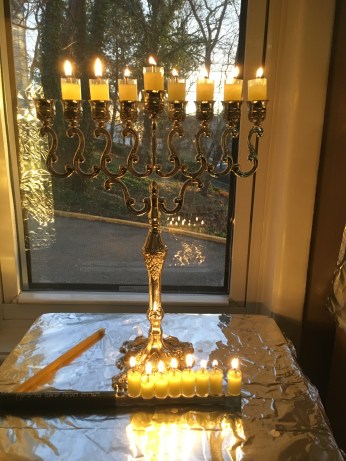
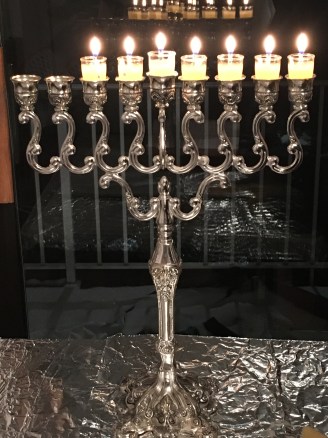
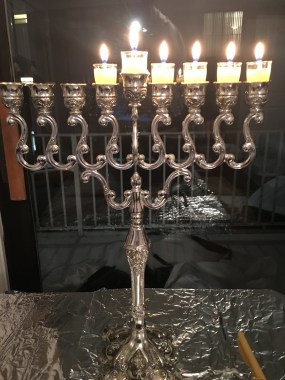
Rav Shaul Alter, Rosh Yeshiva of the Jerusalem Sfas Emes Yeshiva and son of the previous Gerrer Rebbe, notes that the light and inspiration of Chanukah is to last throughout the year. He writes that we know there are two prevalent customs when it comes to the location of lighting our menorahs. The first, is to light in a place which will be seen by the masses. In Israel, this usually means lighting outside, while in America, it usually means lighting near a window where the lights are visible to passersby. The second custom is to light in a doorway on the opposite side of the mezuzah, on the left side of an entrance. This ensures that, the mezuzah on one side, and the menorah on the other, one is literally “surrounded” by mitzvos.

By lighting near the mezuzah, Rav Alter points out, we are almost mimicking the scroll itself. We are commanded to place mezuzos on our doorposts, and they are to remain there for as long as we dwell in that location. Even when we move to a new location, they are to be put up there as well. The mezuzos are kavua, fixed or established. They remain in place day in and day out. This, Rav Alter explains, is how the inspiration from Chanukah should be to us, in our hears. Kavua, established within us for the rest of the year, and for the rest of our lives. We don’t give much day-to-day thought to our mezuzos. They hang on the wall. We see them, but they remain stationary. The inspiration that we gained from Chanukah should carry us through. It must be kavua, affixed within us, until we are recharged and reinspired next year.

Chanukah 5778 – Part VIII: Zos Chanukah: Your Nation, Your Children

Zos Chanukah. We will light no more candles this Chanukah. One of the most powerful parts of the High Holiday season is Neilah, the last tefillah we recite on Yom HaKippurim. One may think that since it’s the final prayer with special petitions for atonement, saying it may be a technicality as our fate has already been sealed so close to the end of the holy day. This idea could not be any further from the truth. It’s powerful exactly because it’s our last opportunity to make our plea. On Shabbos, many consider shaleshudis to be a mere stopgap between the end of Mincha and the beginning of Motzei Shabbos Maariv. This, too, is wholly inaccurate. Any NCSYer can tell you that as Shabbos fades, our connection to it grows stronger. The mere time itself becomes more powerful, more significant. This notion is similarly true when it comes to Zos Chanukah, as some Chassidic masters point out that the final day of Chanukah has an exalted spiritual status the likes of Rosh Hashannah or Yom Kippur. As Chanukah wanes away, there is still time to be inspired.

Rabbi Moshe Shapiro, the recently departed Torah giant from Israel, notes an intriguing insight about Al HaNissim. The text states twice in reference to the Jewish people that they are “Your nation,” God’s nation. The Greeks “rose up against Your people Israel,” and “effected a great deliverance and redemption for Your people Israel.” Yet at the end of the prayer, different nomenclature is employed in regard to Hashem’s nation. “Then Your children entered the shrine of Your House…” It’s not a drastic deviation, but it is nonetheless a deviation from the previous terminology. What does this change in the language of the text mean?

Rabbi Shapiro writes that it’s poignant that only after the war was over and the Chashmonaim triumphantly returned to the Beis HaMikdash are they referred to as “Vanecha,” Your (God’s) children. In the wake of the Jews ascending up to the Temple, clearing the debris, and striving to begin the Avodah anew, they referred to not as God’s nation or people, but His children. Not before the salvation.

I think a possible explanation for this is that in the aftermath of the battle, it wasn’t necessarily certain that the Chashmonaim would be so scrupulous in restarting the Temple service. While they were no doubt ecstatic from their military victory, there also had to have been casualties of war and other damage that could’ve been attended to. It would’ve been completely understandable for that to have been the predominant concern, but it wasn’t. Getting the Menorah back up and running and making the Temple fit for use again was what was more important at that time.

It’s reminiscent of a story told about Rabbi Chaim Berlin (like the yeshiva), who was the son of the Netziv of Volozhin. Rav Chaim was a rabbi in Moscow in the late 1800’s, and due to a life-and-death matter, he would be forced to spend Yom Kippur away from his kehillah. He arrived at shul for Kol Nidre and found it completely empty. Not one person showed up. Rav Chaim was upset, and finally davened to himself. He awoke the next morning and entered the synagogue, and yet again, not a soul in sight. Around mincha time, suddenly, throngs of men covered in dirt converged upon the synagogue. Their petitions and tears were the most intense that Rav Chaim had ever encountered. He finally managed to ask one of the men what had happened and why they had showed up so late and so filthy. The man recognized the rabbi immediately and told him that a few hours before Yom Kippur, the Russian army stormed into town and rounded up every adult male to report for forced labor. They had no choice but to work, to dig ditches. The man began to weep and explained that only now were they able to get away from their aggressors and they ran to shul. At this point, Rav Chaim was crying as well. He addressed the crowd and told them about two neighbors who were arguing over a chicken that each claimed belonged to him. The beis din decided to tie the chicken’s feet together and place it in between the two houses. When its feet were untied, they would watch and see where the bird would walk, and thus it would be discernible to whom the chicken belonged. At this point, Rav Chaim turned his eyes toward Heaven and cried “Hashem, look at what children You have! When their feet are tied together, they have no choice but to go and work. But the moment their feet are untied, where did they go? To the theaters? To the shops? No! They come straight to you! They didn’t go home and rest a little or even tidy up. They came immediately back to You! This is where they instinctively turn!”

Ki Anu Vanecha, V’Ata Avinu. Klal Yisrael are referred to as Hashem’s children in Al HaNissim not when they engage in war, but when they rededicate the Temple.  Let us take stock of today, Zos Chanukah, and use what’s left of this lofty period of holy reflection and rededicating ourselves to the “Torasecha” and “Chukei Retzonecha” that the Yevanim tried so hard to dismantle.

Chanukah 5778 – Part VII: Life is Like a Dreidel

“Life is like a box of chocolates.” “Life is like a bicycle.” “Life is like a box of cereal.”

The above three quotes about life are attributed (respectively) to Forrest Gump, Albert Einstein, and, as far as I know, me.  If you type “Life is a…” into your favorite search engine, you will no doubt generate a plethora of different answers, some relevant and relatable, and others completely foolish. If you think hard enough, or not, you can make many of these connections yourself. They don’t even have to necessarily make any sense! I have no idea why life is like a box of cereal, but I’m sure someone could point me in the right direction.

Rav Moshe Weinberger, beloved Mashpia at Yeshiva University and pulpit rabbi in the Five Towns, comments that life is like a dreidel. The picture shapes up as follows, which you can most likely imagine. There are times when we feel like a “nunn,” where we can coast about life with no particular fanfare. Everything can be routine, or sadly, things can not go our way. Sometimes, we feel like a “gimmel,” where everything is coming up roses for us. We’re on a hot streak, and nothing can go wrong. Other times, we may feel like a “hey,” where our lives are peppered by unexpected little pick-me-ups that carry us about. Unfortunately, there are times when we succumb to the “shin,” where not only do we have to give of ourselves, but, on different occasions, we may be struggling mightily.

I cannot be certain, but I feel as if many of us been in scenarios when we’ve felt like each of the sides of a dreidel. The world keeps moving around us. No matter which face of the Chanukah toy we feel most close to at this moment in time, there are tremendous lessons we learn from the very dreidel itself.

One takes a dreidel in their hand and they spin it around. They have no way of knowing where it will land and what their fate will be. Whether the outcome is good or bad, the player will pick up the dreidel again and spin it once more. The cycle repeats itself. Is this not a metaphor for life? We are spun, turned in different directions. Yet, when the dreidel drops and the dust settles, we get up and face our next endeavor. Some may be enjoyable. Some may be crippling.

Rav Weinberger mentions a story about the Bobover Rebbe, Rabbi Benzion Halberstam HY”D, who, one Chanukah, was playing dreidel with his young grandson, Naftali. Little Naftali spun a gimmel, and, with great excitement, took all the loot in the pile. The next go-around saw the boy get a “hey,” which elicited a similar elated response. The third time he spun his dreidel, Rav Benzion covered the toy before it stopped spinning and before young Naftali could see what it would land on. The Rebbe sat for a moment, and then he said, “My child, it doesn’t really matter what side the dreidel falls on: the main thing is that one must get up and continue moving.” It seems like a bit of an eerie message to a child while playing a game, yet the Rebbe was completely serious. Rav Benzion, unfortunately, met his demise at the hands of the Nazi death machine, yemach shemam. However, his grandson, Rabbi Naftali Halberstam, who eventually became the Bobover Rebbe himself, never forgot this dynamic lesson from his saintly grandfather.

Shlomo HaMelech writes in Mishlei (24:16) that a righteous person falls seven times and gets up. Many of us don’t consider ourselves to be true tzaddikim. If a true tzaddik only stumbles to the ground seven times, how many times does that mean we will fall? Conversely, how many times will we get up? How many times will we brush ourselves off and tackle our issues head-on again? The “game” may not always be easy, and we may not always be winning, but the important thing is to get up, and keep moving.

Chanukah 5778 – Part VI: V’Al HaMilchamos?

IMG_0782.JPG

The Al HaNissim prayer that we recite offers our thanks to the Ribono Shel Olam for the momentous miracles that He wrought in ensuring Jewish survival. In that addition that we recite on Chanukah, and in Haneros Halalu that immediately follows the bracha over the Chanukah lights, among the things that we are thankful for are “the miracles, the salvation, the mighty deeds, the victories, and the wars” which God performed for the Jewish people “in those days, at this time.” It is completely understandable why we thank Hashem for the first four of the five things listed in this tefilah. There are miracles around us each and every day, but the nissim that we offer thanks for were giant, explicit miracles that do not happen with great frequency. The salvation which we are thankful for follows suit to any time that Klal Yisrael has been in danger, yet was rescued by the Mighty Hand of God before calamity struck the entire nation. The mighty deeds help us get to where we are today. The victories gave us the power and the courage to forge ahead even after the threat and adrenaline have subsided. It doesn’t require much more pondering about why these four in particular require praise from us. But why on earth would we thank Hashem for the wars? What is the purpose? Wouldn’t it have been better had the scenario never escalated so dramatically and the reality that we would need a war at all not have come to be?

Rav Avraham Schorr explains that while it does seem a bit askew to thank God for the battles themselves, they are nevertheless important to recognize. Winning these wars ushered tremendous sense of renewal to the Jewish people.  He compares these wars to the wars that we wage against our yetzer hara. Our evil inclination is constantly seeking to lure into dulling our intellect and making poor decisions. The fight against our yetzer hara can be overwhelming, but Rav Schorr explains that it can also conjure up a strong amount of hischadshus into our midst. Furthermore, when one is in a dangerous state, where they do not know if the outcome of their situation will be positive, one will be gripped with a tremendous amount of fear. The Jewish people were trying to maintain their sense of normal religious life when the Yevanim decided that this was beyond the pale. The wars waged force us to rely on the Almighty for guidance and assistance. We thank God for this war not only because it was the vessel for the nissim v’niflaos, but because it brought us as a nation closer to Him. The hischadshus that Rav Schorr talks about was able to recharge the batteries of the Chashmonaim. That feeling when a Diaspora Jew gets when they traverse the ancient, sacred streets of Eretz Yisrael is how the Maccabim felt as they ferociously tried to restore order to the Temple.

Rabbi Shalom Noach Berezovsky, at that time head of the Slonimer yeshiva in Jerusalem, spoke to his students about Chanukah. This message, which was later recorded in the letters and writings of Nesivos Shalom, was given in December of 1973, in the aftermath of the Yom Kippur war. He writes that the miracle of Chanukah rendered each and every Jew, at the time of the war itself through today, as a briah chadasha, an entirely new being. He explains that we recite in Hallel the verse from Tehillim (118:5) “Min hameitzar karasi Kah, anani bamerchav Kah. From the straits I called God; God answered me with a vast expanse.” This vast expanse, the merchav, is a broader picture. Hashem responds to us with merchav, which Rabbi Lord Jonathan Sacks translates as “setting us free.” When we are at our lowest point, one where we cannot imagine arising from, Hakadosh Baruch Hu answers our call with by bringing us close. Yet, the knowledge of a greater plan doesn’t mean that the pain dissipates immediately, or even at all. Nesivos Shalom concludes that the word “merchav” in gematria is equal to “ner.” The pains of war are the meitzar, the difficult places. The “broader picture” is brought about through the Chanukah lights. It would’ve been no less miraculous had the Chashmonaim defeated the Yevanim, and found enough oil to last them until more was able to be procured. Yet, as the Jews were still reveling in their military triumph, they were stopped in their tracks with the situation of the oil for the Menorah. The miracles continued after the oil they found lasted exceedingly longer than anyone could’ve imagined. The wars brought us the miracles. The miracles brought us closer to Hashem. The closeness to God brings us to light the Chanukiah as a reminder that even in the meitzar or life, there is always a merchav.

Chanukah 5778 – Part V: To Truly See

IMG_0779.JPG

There are two statements found back to back in the Gemara (Shabbos 21b) offered by Rabbi Kahana, who quotes Rabbi Nasan bar Minyumi in the name of Rabbi Tanchum. The first statement is that one who lights Chanukah candles higher than 20 amos from the ground, those lights are psulah like a Sukkah or a mavui (for an eruv). The second offering, is different in nature. He seeks to know the meaning of the phrase “v’habor reik ein bo mayim,” that the pit that Yosef was thrown into was empty, and did not have any water. We know it had no water! Rather, this verse comes to teach us that while the pit didn’t contain any water, it did have snakes and scorpions inside of it. Although the two points have nothing to do with each other save for being attributed to the same author, connecting two seemingly random statements by the same person is not uncommon the Talmud.

Rabbi Avraham Schorr offers a unifying factor between our two statements. He quotes from Rabbi Yosef Shaul Nathanson (Shoel U’Meishiv 1:126) who asks why it’s prohibited to kindle Chanukah lights from more than 20 amos high. After all, if it’s dark outside, the lights will surely be able to be seen, even from greater heights! Rabbi Nathanson explains despite the light being able to shine from such elevated levels, the light exuded must be closer to the ground so that it may penetrate into our hearts, and make bright the path on which we walk.

Furthermore, Rav Schorr explains, the light must be bright enough for us to be able to discern the nooks and crannies within the heart of each Jew. It is through this light that we are able to detect our faults and what we must fix within our own lives. The verse in Mishlei tells us that “Ner Hashem nishmas adam, chofes kol chadrei vaten,” that the souls of mankind are the light of the Almighty, which searches out our innermost compartments. This pasuk, Rav Schorr notes, alludes to the lights that we ignite throughout the holiday of Chanukah. When the light is too high, it is impossible to reach us. Even if we can see it, it cannot “see” us, our cracks and cavities.

This logic is in line with the explanation of the pasuk from before about the pit. How many times have you looked at something only to come back later and notice something completely different that you hadn’t recognized before? If one were to look in a dark closet without any light to guide them, they may have a very different idea as to what they were seeing versus reality. True, the pit was empty of water. The Torah tells us that explicitly. Yet, if one were to examine the pit carefully, they would see that it was not empty at all. Rav Schorr points out that Ben Yehoyada writes that the snakes and scorpions were not found at the bottom of the pit, but in the crevices along the walls. It looked empty, but had Yosef’s brothers been able to see the pit in its entirety, they would’ve known that there were creatures lurking in the shadows. Perhaps they wouldn’t have cast him into this particular pit.

This, explains Rav Schorr, is the connection between the two statements made by Rabbi Nasan bar Minyumi in the name of Rabbi Tanchum. The second account asserts that the snakes and scorpions were able to remain concealed because, from the vantage point of Yosef’s brothers, the pit was empty. Similarly, the ability to see the lights of Chanukah from greater than 20 amos high hinders us from being able to peer within ourselves. May we merit to let the Divine light shine upon us, and help us illuminate our lives and our neshamos.